Yes, pickleball is good exercise. Research shows it is a moderate to vigorous workout that can improve strength, balance, heart health and mood, especially in adults over 50. It works best when you add a dynamic warm-up, two strength sessions a week, and recovery work to protect against overuse injuries.
Is Pickleball Good Exercise?
Is pickleball good exercise? Short answer: yes. It feels like play, but your heart rate, your legs, and your balance are all working the whole time.
Here is the catch. Most players get hooked fast. They play more and more, and their bodies are not always ready for that. At In Motion Physical Therapy, we work with athletes and active adults near Farmingdale, and overuse injuries are what we see most from pickleball.
This post covers what the research says about pickleball as a workout, what it does for your body, what it does not do, and how to keep playing without ending up in PT. You will get the plan we give our own community: a good warm-up, strength work, and recovery. If you are also curious about other trendy workouts, see our post on whether Hyrox is healthy.
Is Pickleball a Real Workout?
Yes, absolutely. That is the answer I give players, and the research agrees.
How hard you actually work
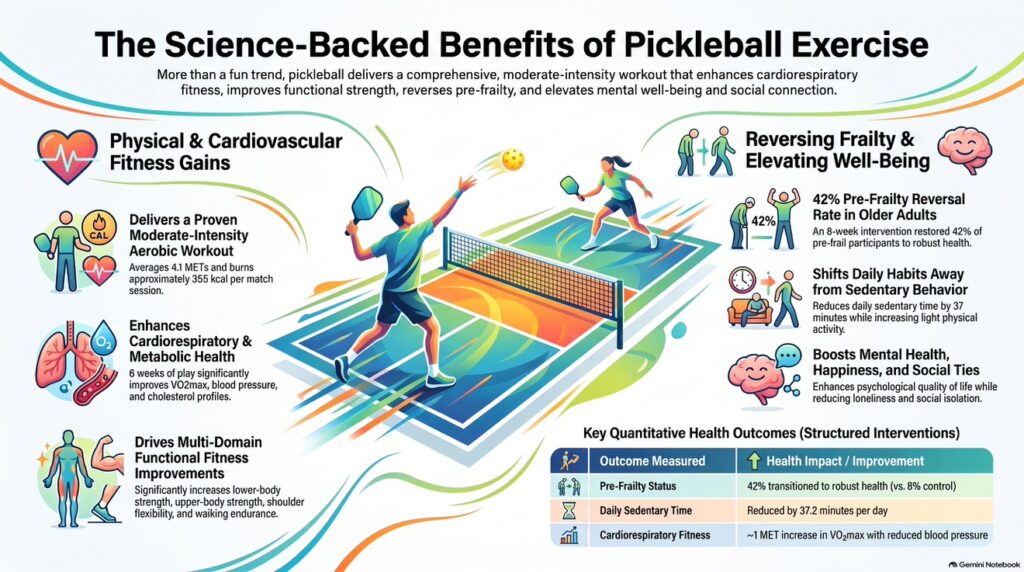
A study of recreational players, average age 62, tracked heart rate during singles and doubles. Players averaged about 111 beats per minute, which is around 70% of their predicted maximum heart rate. More than 70% of their court time was in moderate to vigorous heart rate zones. The researchers concluded that both singles and doubles count as moderate to vigorous activity (Webber et al., 2023).
Singles players took more steps per hour than doubles players: about 3,322 compared with 2,791. So if you want a bit more work from the same hour on the court, singles delivers it.
Why it feels easy but works hard
Pickleball moves in short bursts. Quick rally, brief pause, quick rally. That start and stop rhythm keeps your heart rate up without the grind of a long run. For a lot of people, that is the point. The best workout is the one you actually want to show up for.
What Does Pickleball Do for your Body?
The physical benefits matter. But in my experience, the other benefits matter just as much: hand-eye coordination, time with other people, and the social side of the game. It is so good for you.
Strength, balance and endurance
A randomized controlled trial in older adults with pre-frailty tested an 8-week supervised pickleball program. At the end, 42% of the pickleball group moved from pre-frail to non-frail. In the group that did not play, it was 8%. The pickleball group also improved on the chair stand, arm curl, back scratch, and 6-minute walk tests, and they sat less during the day (Zeng et al., 2026).
That study was small (72 people, median age 67) and the sessions were supervised. It does not mean pickleball fixes everything. It does show that regular play can build the kind of strength and stamina you use in daily life. If you want more on staying strong as you get older, read our post on senior Pilates classes.
Heart health
A 6-week study of middle-aged and older adults found favorable changes in blood pressure, HDL and LDL cholesterol, and aerobic fitness after regular pickleball play (Smith, Buchanan & Dalleck, 2018). It was a short, small study, so treat it as encouraging, not final.
Mood and connection
Pickleball is social. In the Zeng trial, quality of life scores for both physical and mental health went up in the pickleball group. Playing with people you like is a big reason players keep coming back, and a habit you keep is worth more than a perfect plan you drop.
Pickleball is NOT as Easy on your Body as it Looks
One belief we hear a lot is that pickleball is low impact and easy on the body. Compared with tennis, that is true. It is not as hard on you.
But it is not risk-free, and playing alone is not enough to keep you strong. You still need to do things outside of the game to build strength, work on balance, and lower your risk of tripping or falling.
That is where we see so many injuries. A player falls, puts an arm out to catch themselves, and breaks a wrist. Better balance and a stronger body cut down on those moments.
Most of the research so far is in adults over 50, so we know less about younger players. The studies above also used short time frames, so they tell us what happens over weeks, not years.
What About Pickleball Injuries?
Overuse injuries are the ones we see most. Think tendon pain in the elbow, shoulder, or knee that builds up from playing a lot without enough prep or strength.
Ankles and knees take a beating on any court. If you want to see how we think about those joints, our posts on basketball ankle sprains and preventing knee injuries while running apply here too.
Should I Keep Playing Pickleball with Pain?
We don’t like shutting anyone down from playing completely unless there is a reason to. For example: a fracture is a reason to stop playing. Otherwise, use these three questions:
- Does it hurt while you are playing? Stop, or play less.
- Does the pain last more than 24 hours after you stop? That is a good reason to get it looked at.
- Is the pain sharp and getting worse as you keep playing? Stop and get it looked at.
- Did you have a hard impact or specific incident that caused the pain? Get it looked at.
You do not have to quit the sport. Often a small change to how much you play, plus the right plan, is all it takes.
How to Play Pickleball Without Getting Hurt
You can prevent most overuse injuries with three things: a good warm-up, a strength plan, and stretching.
Do a dynamic warm-up first
Warm-ups matter so much. Before you play, do an active, dynamic warm-up that gets your ankles moving, your hips warm, and some rotation through your trunk. You want your muscles engaged and ready before the first serve. Standing still and stretching a cold muscle does not do that.
Strength train twice a week
Plan on two strength sessions a week, about 30 minutes each. It does not have to be anything crazy. Strength work helps decrease the tendon problems and other overuse injuries we see all the time in pickleball players. It also builds the leg and hip strength you need to stay steady on quick turns.
If you are not sure where to start, our sports physical therapy team can build a plan around how often you play and what already bothers you. Our sports performance program is where the strength training happens.
Add Pilates for core control and balance
Pilates is great for core control and balance, which is exactly what you lean on when you reach wide or change direction fast. Our Reformer Pilates classes are a good fit if you want that work in a small group setting.
Use assisted stretching for recovery
If you are playing a tournament or lots of back-to-back games, assisted stretching is a great recovery tool. Here is how it helps athletes: benefits of assisted stretching.
Is Pickleball Good Exercise FAQ
Is pickleball good exercise for seniors?
How many calories does pickleball burn?
Is pickleball hard on your knees?
Is pickleball enough exercise on its own?
How do I know if my pain means I should stop playing?
Ready to Play Pickleball Pain Free?
Is pickleball good exercise? Yes. It gets your heart rate up, builds strength and balance, and it is fun enough that you keep doing it. Pair it with a dynamic warm-up, two strength sessions a week, and recovery work, and you can play for a long time.
Looking for sports physical therapy near Farmingdale, NY? Our team at In Motion Physical Therapy can build a plan to keep you on the court. Reach out through our contact form or call (516) 659-1087.
Next on Your Reading List:
Note: This blog post provides general information and should not be considered a substitute for professional medical advice. If you have any concerns or specific conditions, consult with your healthcare provider before making changes to your recovery routine.
References:
- Webber SC, Anderson S, Biccum L, et al. Physical activity intensity of singles and doubles pickleball in older adults. Journal of Aging and Physical Activity. 2023;31(3):365-370. https://pubmed.ncbi.nlm.nih.gov/36087934
- Zeng Z, Zheng X, Sit CH, Wong SH, Sum RK, Yang Y. Effects of pickleball on pre-frailty, physical fitness, 24-hour movement behaviors, and quality of life in older adults: a randomized controlled trial. International Journal of Nursing Studies. 2026;180:105549. https://pubmed.ncbi.nlm.nih.gov/42066553
- Smith LE, Buchanan CA, Dalleck LC. The acute and chronic physiological responses to pickleball in middle-aged and older adults. International Journal of Research in Exercise Physiology. 2018.
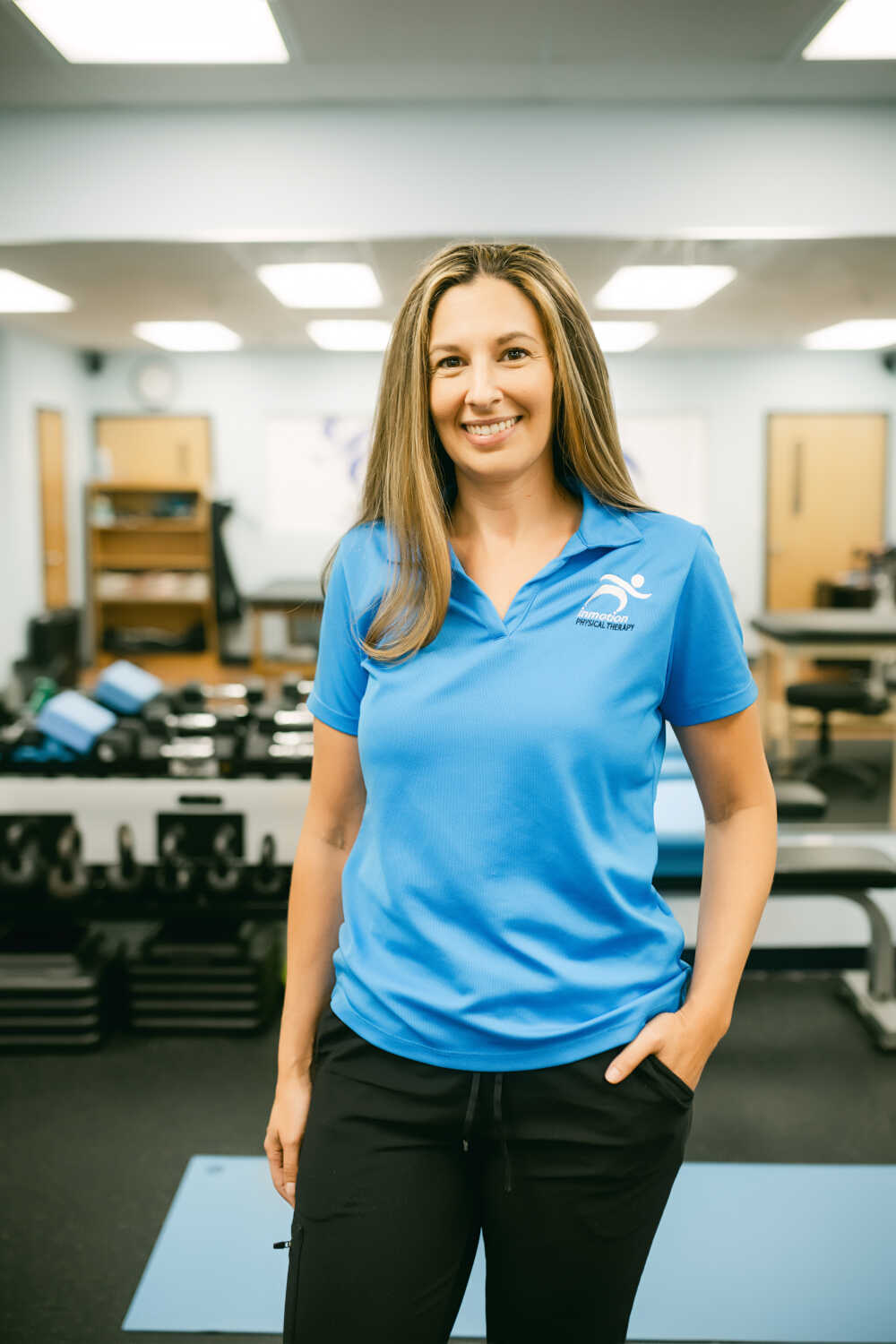
Laura Sommer has been practicing as a Physical Therapist since 2011. She graduated from Northeastern University, where she was a member of the Women’s Soccer Team. Laura is the owner of In Motion Physical Therapy located in Farmingdale, NY.