The most effective way to prevent knee injuries while running is to manage your training load gradually, build lower-body strength, and pay attention to early warning signs before they become real problems. Shoes, insoles, and stretching alone won’t protect your knees — but smart progression, consistent strength work, and taking care of your whole body will. If you already have knee pain while running, general prevention advice isn’t enough — you need an individualized assessment to figure out what’s actually going on.
Introduction
If you’re a runner, chances are you’ve dealt with knee pain at some point — or you know someone who has. It’s one of the most common complaints I see in my clinic, and it’s also one of the most misunderstood.
There’s a lot of noise out there about what prevents knee injuries while running. Buy these shoes. Stretch more. Change your form. And while some of those things have a place, none of them are the whole answer.
I’m a sports physical therapist and a half marathon runner who has navigated her own share of running injuries over the last few years. What I’ve learned — both in the clinic and on the road — has genuinely changed how I think about knee health. In this post, I’m going to break down what the research says, what I see clinically, and what I’ve experienced personally, so you can keep running without your knees getting in the way.
Why Knee Injuries Are So Common in Runners
Running is repetitive by nature. Every mile, your knees absorb force hundreds of times. That repetition isn’t the problem — your body is designed to adapt to it. The problem is when we ask our bodies to absorb more than they’re currently prepared for, without giving them the time or resources to catch up.
Research consistently points to two main culprits: previous injury and training load errors. Not bad shoes. Not flat feet. Not an imperfect stride. The biggest risk factors are things we have a lot of control over — which is actually good news.
The #1 Risk Factor for Future Knee Pain
If you’ve had a knee injury before, that is the single strongest predictor that you’ll have one again. And here’s why: when an injury doesn’t fully heal, your knee loses strength and your body compensates with movement patterns that put more stress on the surrounding structures.
Feeling “fine” after an injury isn’t the same as being ready to ramp back up. Full recovery means rebuilding strength, restoring range of motion, and gradually reloading the tissue — not just waiting until the pain goes away and picking up where you left off. That gap between “pain-free” and “actually ready” is where a lot of runners get hurt again.
How to Prevent Knee Injuries While Running: It Starts With Your Training Load
This is where I see the most errors — and honestly, where my own injuries have come from too.
The research is clear that sudden spikes in training intensity are more dangerous to your knees than total mileage. A small jump in how hard you’re pushing can cut how much your tissues can handle dramatically. And “intensity” doesn’t just mean speed. Hills, back-to-back hard days, adding strength work on top of a heavy run week — all of it counts.
In the clinic, I see a pattern over and over: runners doing too much in the middle. Their easy runs are actually too hard. Their hard runs aren’t hard enough. Everything lives in that moderate gray zone, and there’s no real recovery happening. The fix isn’t always doing less — it’s being more intentional about what each run is actually supposed to do.
Some practical guidelines:
- Increase your weekly load gradually — distance, intensity, hills, and speed work all count separately
- Hold a new workload steady for a few weeks before adding more
- Alternate harder sessions with true easy days or low-impact recovery
- Reduce load temporarily when soreness changes your stride or gets worse as you run
One thing the research doesn’t talk about enough: stress is stress. Your body cannot differentiate between running stress and life stress.
When I was building back to half marathon training, the issue wasn’t that I was doing too much too fast. It was that I was running while also managing a growing business, three young children, inconsistent sleep, and not enough calories.
All of that stress — physical, mental, emotional — lands in the same bucket. Your training load isn’t just your miles. It’s your whole life.

The Strength Training Approach That Actually Protects Your Knees
Strength training doesn’t get a perfect report card in the research when it comes to preventing knee injuries specifically. But here’s how I think about it: you’re building capacity. The stronger your quads, hips, and calves are, the more load your body can handle before something breaks down.
The movements that matter most:
- Split squats or step-downs — single-leg strength that mirrors what running actually demands
- Squats or deadlifts — overall lower-body loading
- Calf raises — often overlooked, but your calves absorb a massive amount of force with every stride
- Hip abductor work — side steps, clamshells, single-leg exercises — your hips control what happens at your knee
Two days a week is enough. You don’t need exhausting prehab circuits. You need controlled, progressive resistance that gets harder over time. If the weight never changes, your body never adapts.
A solid warm-up routine before you run is also part of the equation — we break down exactly what that looks like in our post on proven strategies to prevent running injuries.
What About Shoes, Insoles, and Running Form?
Here’s the honest answer: the evidence that shoes, insoles, or stretching alone prevent running injuries is weak. Flat feet and pronation — two things runners worry about constantly — are not directly tied to higher injury rates. Healthy runners and injured runners often move in almost identical ways.
That doesn’t mean footwear doesn’t matter at all. Replacing worn-out shoes regularly was actually linked to lower injury rates in recreational runners. So yes, replace your shoes when they’re worn or uncomfortable. But don’t spend time chasing the “perfect” model or assuming a new shoe is going to fix a training load problem.
Form adjustments can be useful — a slightly higher cadence or softer landing can reduce front-of-knee stress — but these are best explored with a clinician, not applied as a blanket rule for every runner.
Fueling Matters More Than Most Runners Realize
Your body needs adequate food to repair bone, tendon, and muscle after every run. If you’re not fueling enough, your tissues can’t recover — no matter how smart your training is.
I am not a nutrition expert, and I’ll always point you toward a registered dietitian for the specifics. But I will say this from personal experience: one of the hardest parts of training as a parent is actually feeding yourself. When you’re feeding three kids, making sure they have what they need, and running a business, your own nutrition is the first thing to go.
Running does make you hungry, but hungry doesn’t always translate into eating enough of the right things. Carbohydrates and protein are your non-negotiables for tissue recovery. If those are consistently low, your injury risk goes up — even if everything else looks right.
Recovery doesn’t stop at what you do after a run — it also includes what you do on your off days. If you’re looking for a low-impact way to support your training, read our post on whether to do Pilates before or after running
Warning Signs Your Knees Are Telling You to Back Off
Pain is information. And the right response to that information is not always “push through it.”
Stop and get assessed if you experience:
- Pain that persists after a run and doesn’t settle within a day or two
- Pain that escalates as you run rather than warming up and going away
- Limping during or after a run
- Swelling, locking, or a giving-way sensation in the knee
- Sharply localized pain, especially with a history of prior injury
A month of hoping it resolves on its own is usually long enough to know — it’s not going to resolve on its own. The sooner you get in front of someone who can identify what’s actually happening, the faster you get back to running.
A Simple Starting Framework for Knee-Healthy Running
If you’re building a running routine and want to set yourself up well, start here:
- Three runs per week, mostly at a conversational pace (this might mean run-walk intervals)
- No more than one hard session per week
- Two short strength sessions focused on the movements above
- Gradual progression — and give new loads time to stick before adding more
- Real recovery built in, not just “easy” days that are still kind of hard
If you already have knee pain, this framework isn’t enough. The right approach depends on what’s actually going on — patellofemoral pain, tendon pain, IT band irritation, and joint pain all have different drivers and different solutions. A general prevention plan won’t get you there.
Knee pain isn’t the only thing runners need to watch for. Foot pain is another common complaint — if you’re dealing with heel pain first thing in the morning, check out our guide on plantar fasciitis treatment for runners.
Frequently Asked Questions About How to Prevent Knee Injuries While Running
What is the most common cause of knee pain in runners?
How do I strengthen my knees for running?
Can I run through knee pain?
Do running shoes prevent knee injuries?
How long does it take for runner's knee to heal?
Can stress cause running injuries?
Where to Find Help for Knee Pain While Running in Farmingdale, NY
When a runner comes to see me, the first thing I want to know isn’t just where it hurts. It’s what race they’re training for. What their training week actually looks like. How they’re sleeping. Whether they’re in the gym.
From there, I’m looking at quad strength, ankle mobility, and hip strength — because those are the three areas most likely to be contributing to why the knee is under stress in the first place. That picture tells us so much more than an X-ray or an MRI ever could about what needs to change.
Your knees are more resilient than the internet would have you believe. You don’t need perfect biomechanics, expensive shoes, or a flawless stride to stay healthy. You need a training plan that respects your body’s capacity — all of it, not just your miles.
If you’re dealing with knee pain while running and you’re ready to figure out what’s actually going on, we’d love to help. At In Motion Physical Therapy of NY, we work with runners, athletes, and active people who want to get back to doing what they love — better than before.
Next on Your Reading List:
Note: This blog post provides general information and should not be considered a substitute for professional medical advice. If you have any concerns or specific conditions, consult with your healthcare provider before making changes to your recovery routine.
References:
Senthil K, et al. Risk factors for knee injuries in runners: a systematic review. Orthopaedic Journal of Sports Medicine. 2026. https://journals.sagepub.com/doi/epub/10.1177/23259671261444314
Napier C, Willy RW. The prevention and treatment of running injuries: a state of the art. International Journal of Sports Physical Therapy. 2021. https://ijspt.scholasticahq.com/article/25754-the-prevention-and-treatment-of-running-injuries-a-state-of-the-art
Taunton JE, Ryan MB, Clement DB, McKenzie DC, Lloyd-Smith DR, Zumbo BD. A retrospective case-control analysis of 2002 running injuries. Canadian Family Physician. 2003;49:1101-1109. https://www.cfp.ca/content/49/9/1101.short
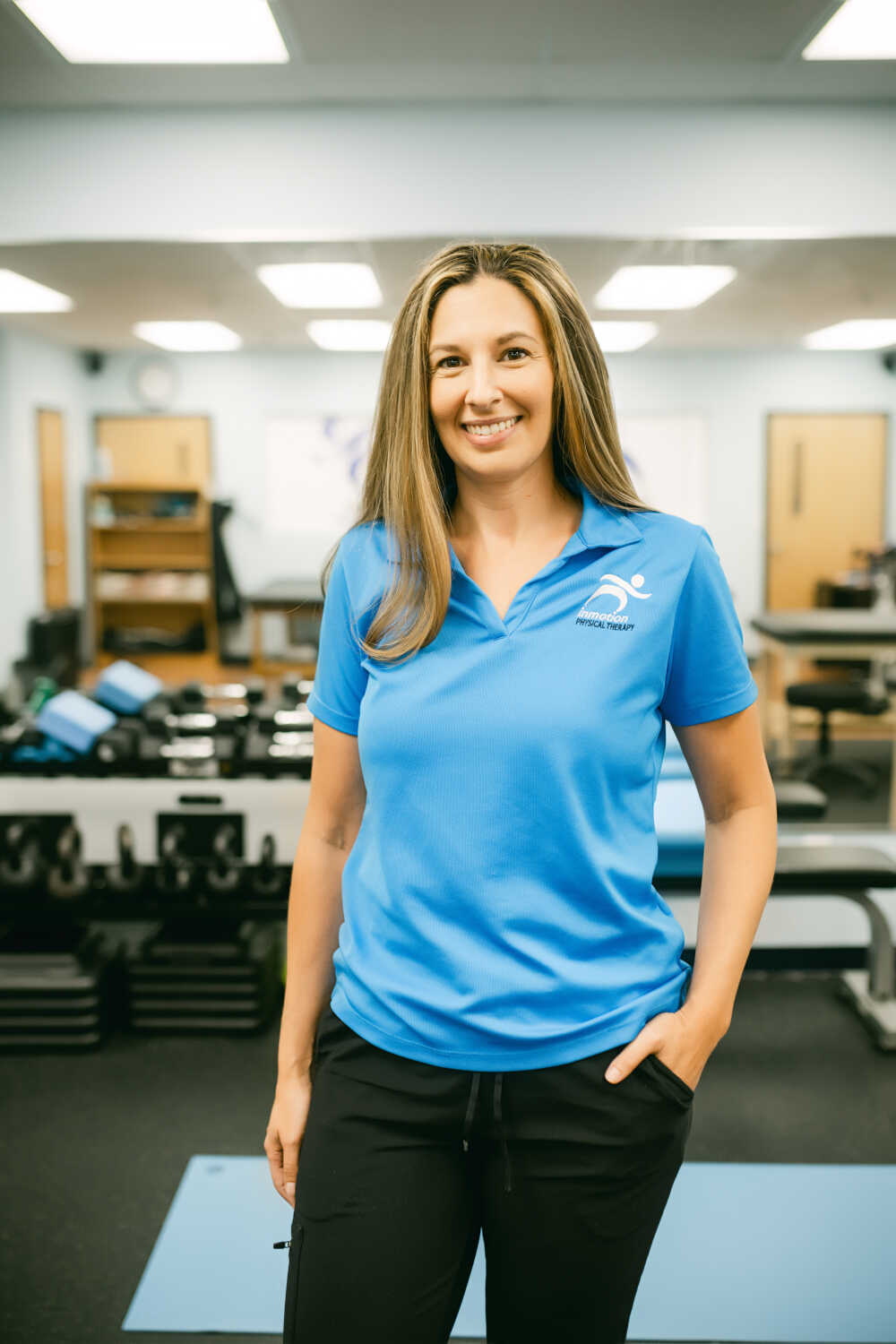
Laura Sommer has been practicing as a Physical Therapist since 2011. She graduated from Northeastern University, where she was a member of the Women’s Soccer Team. Laura is the owner of In Motion Physical Therapy located in Farmingdale, NY.