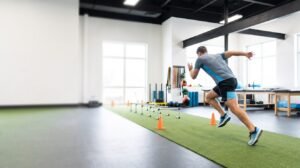
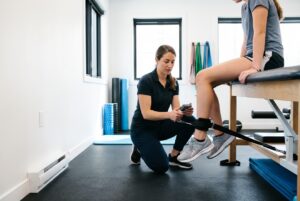
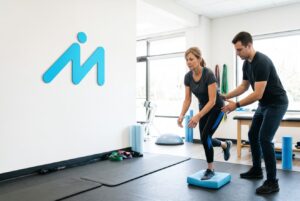
Some athletes do lose speed after ACL surgery, especially early on, but it is often recoverable with the right training. This guide from a physical therapist who has had ACL surgery explains why speed can lag, how it is tested, and how to rebuild it step by step.
Last weekend, my daughter beat me in a race to our neighbor’s house.
I laughed. Then I got a little competitive about it. After we passed our neighbor’s house, I was able to outrun her, but how fast she took off ahead of me bruised my ego a little.
After my ACL surgery as an adult, I focused on getting strong and getting back to my life. Top-end speed was never a priority. Now I’m realizing that if I want to keep up with my kids, I need to start training more explosive movements.
If you’re wondering whether you lose speed after ACL surgery, you probably have the same question I did, and a fair one. The honest answer is that some athletes do, especially early on. The good news is that speed is trainable, but it usually doesn’t come back on its own.
Do You Lose Speed After ACL Surgery? The Honest Answer
The short answer: sometimes, and it depends on how your rehab is built.
Direct research on sprint speed after ACL surgery is limited, and what exists is mixed. In one study of NFL Combine athletes, players who had ACL reconstruction ran the same 40-yard dash as matched players who never had the surgery. But those are elite athletes who made it back to that level, so they’re not typical. In another study, Division 1 football players about two years after surgery showed symmetrical sprint mechanics between their legs.
Game performance tells a more mixed story. One study of professional athletes found that NFL players’ performance stayed lower for up to three seasons after surgery.
Other research shows why speed can lag along the way. In one study of ACL patients, quad strength averaged about 78% of the other leg at 9 and 12 months, and about 92% at 24 months.
Recovery kept going long after most people were cleared.
I’d read it this way: speed often comes back, but strength and power need to be trained on purpose, and for longer than many people expect.
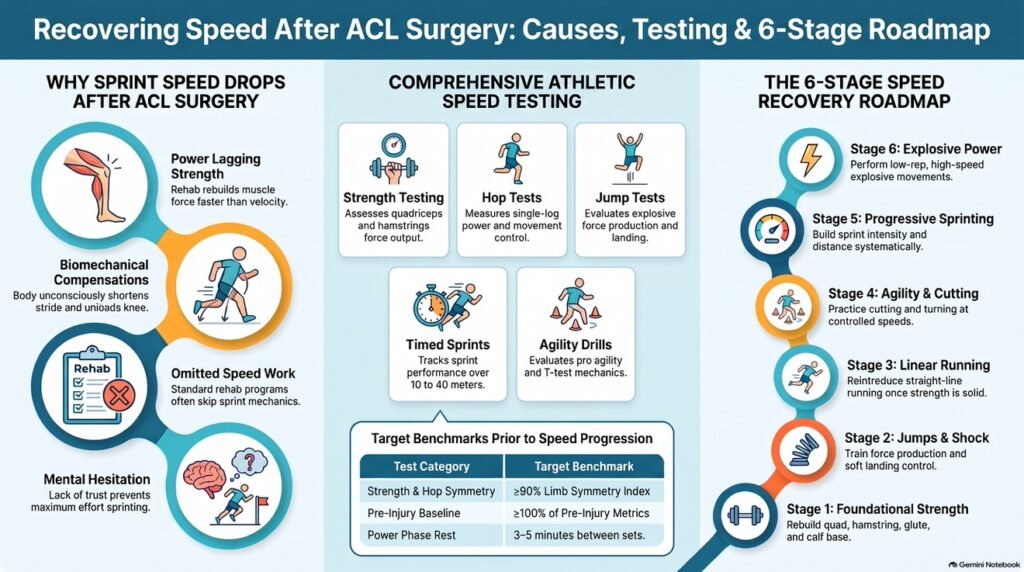
Why Speed Can Drop After ACL Surgery
Strength and Power Don’t Come Back at the Same Pace
Strength is how much force your muscles can make. Power is how fast they make it. Speed depends on power. After surgery, rehab often rebuilds strength first, and power can lag behind.
Your Body Learns to Protect the Knee
After surgery, many people shorten their stride or load the operated leg a little less without realizing it. That helps early on, but it can limit your top speed later if no one trains you out of it.
Speed Work Often Gets Skipped
Many rehab programs don’t build in speed work. A review of return-to-running criteria found that fewer than one in five studies used anything beyond time to decide when running could start. A clinical commentary on plyometrics notes that few patients complete a plyometric program before returning to sport.
Trusting Your Knee at Full Speed Takes Practice
Going full speed on a knee that was once injured is a mental step as well as a physical one. I felt that with skiing, and our post on returning to the slopes after ACL surgery covers that side of it.
How Is Speed Tested After ACL Surgery?
There’s no single sprint test that has been validated for ACL surgery. A critical review of hop tests found that “passing” them doesn’t predict outcomes consistently, and that hop distance alone can make the knee look more recovered than it is. So I like to combine several measures:
- Strength testing for the quads and hamstrings
- Hop tests for single-leg power and control
- Jump tests for explosiveness
- A timed sprint over about 10 to 40 meters
- A change-of-direction test, like a T-test or pro agility drill
- Movement quality, meaning how your knee tracks and how you land
Compare Yourself to Your Own Baseline
Matching your other leg isn’t enough. If your uninjured leg got weaker during rehab, both legs can be below where you started. If you have old sprint times or jump numbers from before your injury, those are the best targets. Many guidelines use about 90% symmetry in strength and hop tests as one benchmark.
How to Get Your Speed Back After ACL Surgery
Speed comes back in stages. Each step builds on the one before it, and you move forward when your knee passes the tests, not when the calendar says so.
- Strength. Everything else is built on this. Quads, hamstrings, glutes, and calves all need to be strong before you add speed. Our guide to 3 months post-ACL surgery exercises shows where to start.
- Jumps. Jumping teaches your muscles to produce force quickly and your knee to absorb it. Start small and focus on soft landings with your knees in line with your hips.
- Running. Once strength and jumping feel solid, running comes back in. Our post on how soon you can run after ACL surgery covers when that starts.
- Changing direction. Cutting, stopping, and turning put different demands on your knee than running straight. Practice these at controlled speeds before going all out.
- Build speed. Now you add sprints. Short bursts first, then longer ones, a little more effort at a time. Avoid big jumps in sprint volume.
- Power. Power is how fast you can use your strength. In our team’s training model, this phase comes after you’ve built maximum strength. It’s where we train for explosive movement: jumping, cutting, and sprinting.
Power work looks different from strength work. You use fewer reps (about 1 to 5), move as fast and explosively as you can, and rest longer between sets (about 3 to 5 minutes), so each rep stays explosive. Examples include jump variations and explosive lifts like the power clean. We use criteria, such as hop test symmetry of 90% or higher, to decide when you’re ready for it, not the calendar. Our sports performance program is where we build this phase.
What I’m Doing
I’m adding more sprint work back into my running, and more targeted strength and power training into my winter training block. I’ll keep you posted on whether my daughter ever lets me win 😜.
How Long Does It Take to Regain Speed After ACL Surgery?
There’s no fixed date. Sprinting is usually added in the later stages of rehab, once your strength and control are ready. Our guide on how soon you can run after ACL surgery covers when running starts, and our ACL healing timeline walks through the stages.
Strength keeps improving for a long time after clearance, so speed training doesn’t stop when formal rehab ends. If you’re years out like me and speed was never a priority, you can still start now.
Do You Lose Speed After ACL Surgery? Frequently Asked Questions
Do you lose speed after ACL surgery?
How long does it take to get your speed back after ACL surgery?
Can you run as fast as before after ACL surgery?
How do you test speed after ACL surgery?
What exercises help you regain speed after ACL surgery?
Ready to get your speed back? Our team builds strength, power, and speed work around your knee and your sport. Reach out through our contact form or call us at (516) 659-1087. You can also learn more about our sports performance program.
Next on Your Reading List:
Note: This blog post provides general information and should not be considered a substitute for professional medical advice. If you have any concerns or specific conditions, consult with your healthcare provider before making changes to your recovery routine.
References:
- Keller RA, Mehran N, Austin W, Marshall NE, Bastin K, Moutzouros V. Athletic performance at the NFL Scouting Combine after anterior cruciate ligament reconstruction. Am J Sports Med. 2015;43(12):3022-3026.
- Curran MT, Bedi A, Kujawa M, Palmieri-Smith R. A cross-sectional examination of quadriceps strength, biomechanical function, and functional performance from 9 to 24 months after anterior cruciate ligament reconstruction. Am J Sports Med. 2020;48(10):2438-2446.
- Ito N, Lin Y-C, Martin JA, et al. Exploring sprint kinematics in American football athletes after anterior cruciate ligament reconstruction. Scand J Med Sci Sports. 2026. doi:10.1111/sms.70200
- Rambaud AJM, Ardern CL, Thoreux P, Regnaux JP, Edouard P. Criteria for return to running after anterior cruciate ligament reconstruction: a scoping review. Br J Sports Med. 2018;52(22):1437-1444.
- Buckthorpe M, Della Villa F. Recommendations for plyometric training after ACL reconstruction: a clinical commentary. Int J Sports Phys Ther. 2021;16(3):879-895.
- Davies WT, Myer GD, Read PJ. Is it time we better understood the tests we are using for return to sport decision making following ACL reconstruction? A critical review of the hop tests. Sports Med. 2020;50(3):485-495.
- Grindem H, Snyder-Mackler L, Moksnes H, Engebretsen L, Risberg MA. Simple decision rules can reduce reinjury risk by 84% after ACL reconstruction: the Delaware-Oslo ACL cohort study. Br J Sports Med. 2016;50(13):804-808.
- Performance-based outcomes after anterior cruciate ligament reconstruction in professional athletes differ between sports. Am J Sports Med. 2017;45(10). [Add authors and pages]
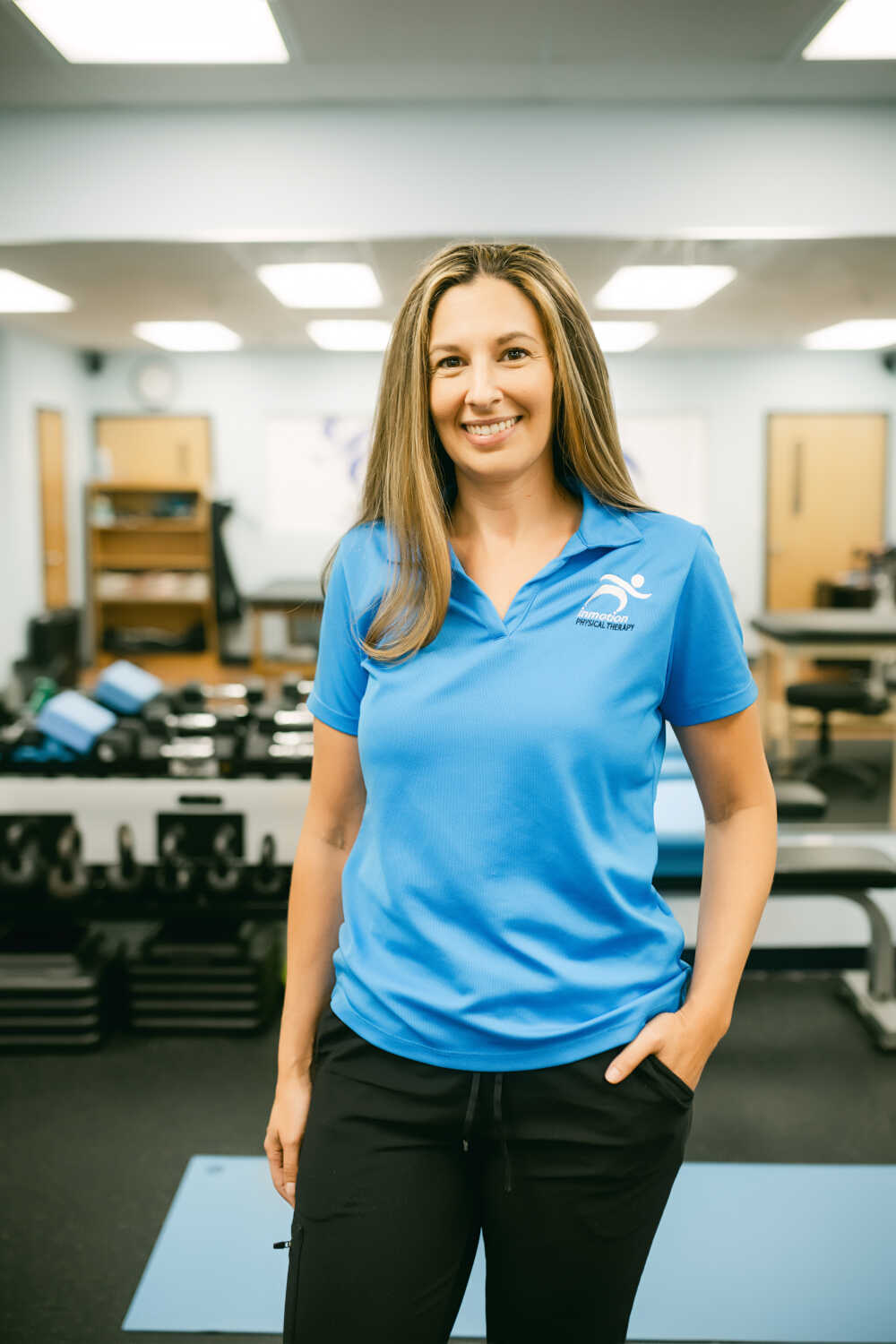
Laura Sommer has been practicing as a Physical Therapist since 2011. She graduated from Northeastern University, where she was a member of the Women’s Soccer Team. Laura is the owner of In Motion Physical Therapy located in Farmingdale, NY.