Written by
In Motion Physical Therapy
Published on
January 8, 2026
Are You Worried About Your Spine Health?
If you’ve been diagnosed with osteopenia or osteoporosis in your lumbar spine, you’re probably wondering what exercises increase bone density in the spine. The good news? Research shows that specific exercises can actually rebuild bone in your vertebrae – but not all exercise works.
Many people are surprised to learn that walking, swimming, and yoga won’t improve your bone density. While these activities offer wonderful health benefits, your bones need something more: high-impact loading.
This blog post will explain exactly what exercises increase bone density in the spine, backed by groundbreaking research from the LIFTMOR trial. You’ll discover the specific movements, intensity levels, and frequencies proven to strengthen your vertebrae.
Ready to strengthen your spine safely? Our physical therapy team specializes in bone health programs in Farmingdale, NY.
Understanding Your Bone Density Results
Before we dive into exercises, let’s quickly review what your DEXA scan results mean.
DEXA Scan Basics: Your bone mineral density is measured using dual-energy x-ray absorptiometry (DEXA). Results are reported as T-scores, which compare your bone density to a healthy young adult.
What Your T-Score Means:
- Normal: T-score of -1 or higher
- Osteopenia: T-score between -1 and -2.5 (low bone density)
- Osteoporosis: T-score of -2.5 or lower
The spine (lumbar region), hip (femur), and wrist are the most common fracture sites, which is why your DEXA scan focuses on these areas.
Why Most Exercise Doesn’t Build Bone
Here’s the uncomfortable truth: your bones need stress to grow stronger.
Your bones are living structures that constantly break down and rebuild. This process is called “bone remodeling.” For bones to rebuild stronger, they need to experience forces significantly greater than what you encounter in daily life.
This is why:
- Walking doesn’t build bone density (only 1.5x your body weight)
- Swimming doesn’t build bone density (you’re floating- no impact there)
- Light yoga doesn’t build bone density (minimal loading)
Your bones need high-impact, rapid loading to trigger new bone growth. Think of it like building muscle – you can’t lift 2-pound dumbbells forever and expect to get stronger.
The LIFTMOR Trial: Groundbreaking Research
The most important study on what exercises increase bone density in the spine is the LIFTMOR trial (Lifting Intervention For Training Muscle and Osteoporosis Rehabilitation).
Study Design: Postmenopausal women with low bone mass trained with heavy weights for just 30 minutes, twice per week for 8 months.
Remarkable Results:
- 3-4% increase in lumbar spine bone density
- 13.6% increase in hip cortical thickness
- Improved posture and reduced thoracic kyphosis
- Enhanced balance and muscle strength
- Zero fractures reported, despite lifting heavy weights
A follow-up study (LIFTMOR-M) with men showed even more impressive results: 4.1% improvement in lumbar spine BMD.
These results revolutionized how we approach osteoporosis treatment. The key? High-intensity resistance and impact training (HiRIT).
The Exercise Formula for Bone Growth
Based on the LIFTMOR protocol and clinical guidelines, here’s what your bones need:
Resistance Training:
- Frequency: 2x per week
- Sets & Reps: 2-5 sets of 5-12 reps
- Intensity: 70-85% of your 1-rep max (heavy!)
Impact Training:
- Frequency: 4-7x per week
- Sets & Reps: 3-5 sets of 10-20 jumps
- Intensity: 2-3x your body weight in ground reaction force
Power Training:
- Frequency: 2x per week
- Sets & Reps: 2-5 sets of 5-12 reps
- Intensity: 40-60% of 1-rep max (fast movement)
⚠️ Critical Safety Warning: Don’t Try This Alone
Before we discuss specific exercises, understand this: these exercises can fracture your spine if performed incorrectly, especially if you don’t have a history of strength training.
The Risk is Real: If you have osteoporosis, your bones are already weakened. Improper form during heavy loading – like rounding your back during deadlifts or loading too heavy too soon – can cause compression fractures in your vertebrae.
Why the LIFTMOR Trial Had Zero Fractures: Every participant was supervised by exercise professionals who taught perfect form, started at appropriate weights, and progressed gradually over months.
Before Starting Any Exercise Program:
- Consult with your doctor about your bone density status
- Get medical clearance for high-intensity exercise
- Work with a physical therapist who understands osteoporosis
Attempting these movements from a blog post or YouTube video without professional guidance is dangerous. You need hands-on coaching to learn proper form and appropriate starting weights for YOUR body.
Schedule a supervised consultation or call (516)659-1087 to start safely.
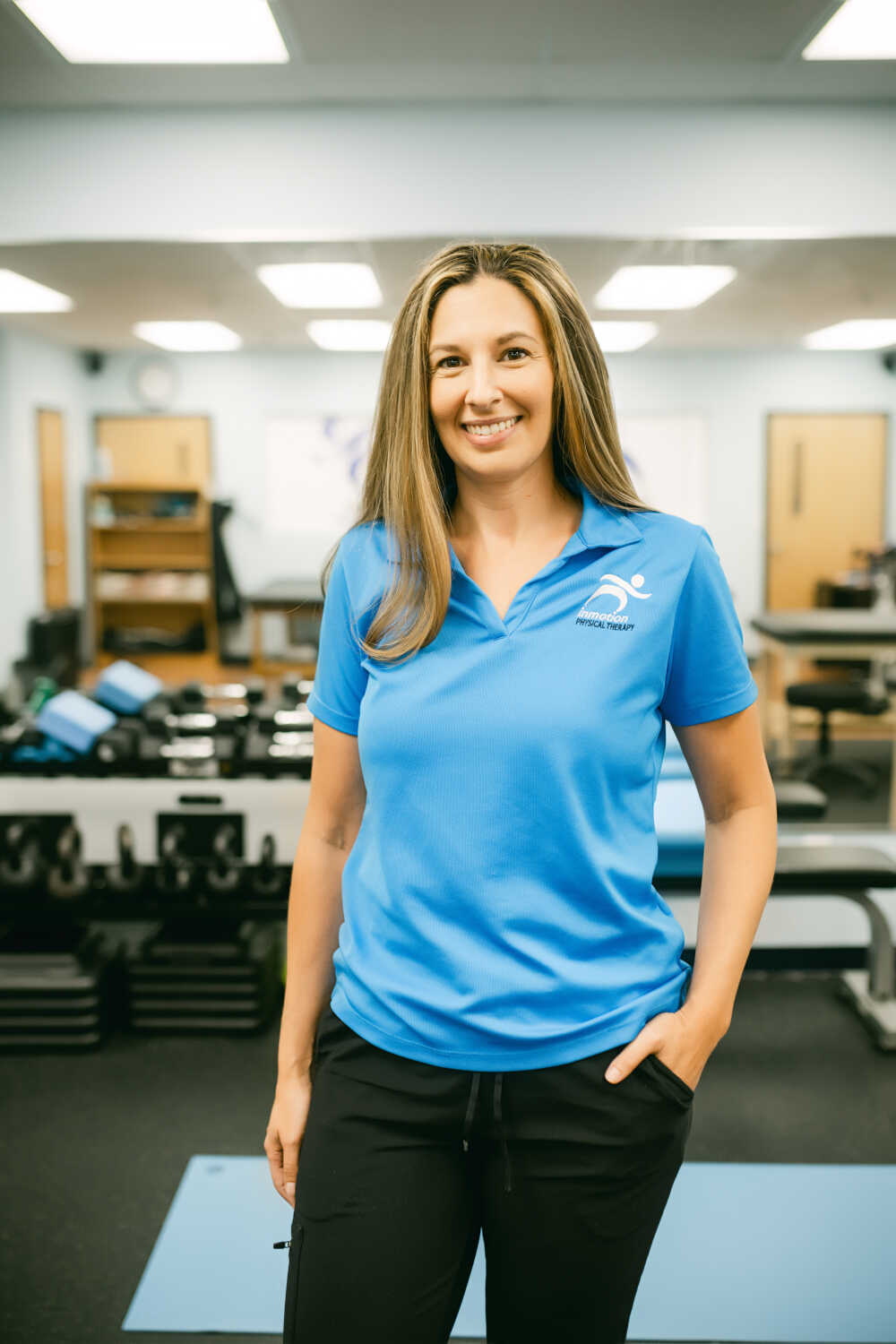
Laura Sommer has been practicing as a Physical Therapist since 2011. She graduated from Northeastern University, where she was a member of the Women’s Soccer Team. Laura is the owner of In Motion Physical Therapy located in Farmingdale, NY.