Returning to gymnastics after spondylolysis is possible with a structured, criterion-based progression that prioritizes spinal healing, core strength, and pain-free movement over a fixed timeline. Rather than simply waiting out a rest period, gymnasts work through specific phases – from neutral spine exercises to full back-extension skills – guided by how their body responds at each step. A sports physical therapist with gymnastics experience can help your athlete know exactly when they are ready to move forward safely.
Your gymnast just got the diagnosis: spondylolysis. Maybe the doctor called it a stress fracture. Maybe they used the words “pars interarticularis.” Either way, you walked out of that office with a pit in your stomach and a prescription for rest – and almost no answers about what comes next.
Your gymnast defines themselves by this sport. The gym is their second home. “Just stop gymnastics for three months” is not a plan. It’s a sentence.
Here is the truth: a time-based approach to returning to gymnastics after spondylolysis often misses the mark. The injury heals on its own schedule, and more importantly, rest alone does not fix the movement patterns, core weaknesses, and landing mechanics that likely contributed to the fracture in the first place.
What actually works is a step-by-step return that is based on what your gymnast’s body can do, not the calendar.
What Is Spondylolysis and Why Does It Hit Gymnasts So Hard?
Spondylolysis is a stress fracture of a small section of the vertebra called the pars interarticularis. In gymnasts, it happens most often in the lower lumbar spine, typically L4 or L5.
Why gymnasts? Because gymnastics involves repetitive, high-force extension of the spine. Every back walkover, back handspring, and layout puts significant compression and shear stress through that exact area. Add year-round training, growth spurts, and the fact that most gymnasts start before their bones have fully matured, and you have a recipe for a stress injury that builds over time before it ever shows up on imaging.
Research confirms that female gymnasts have the second-highest rate of stress fractures of any sport. The lower body — including the spine — accounts for more than half of all gymnastics injuries. This is not rare. But it does require a sport-specific recovery plan.
Spondylolysis is actually one of four common lower back diagnoses we see in gymnasts. If you want a full breakdown of the others — including disc injuries and mechanical back pain — read our post on gymnast lower back pain.
Why a Generic “Rest for Three Months” Plan Falls Short
The frustrating part about a time-based return is that it answers the wrong question. Three months of rest tells you nothing about whether your gymnast is actually ready to do a back walkover again.
Has the pain resolved? Maybe. But is the core strong enough to protect the healing vertebra under load? Are the hips mobile enough to reduce the demand on the lumbar spine during extension? Has anyone taught your gymnast how to land with better mechanics so the spine is not taking the full brunt of every dismount?
If the answer to any of those questions is no, putting your gymnast back on the beam after three months is just restarting the injury clock.
A criterion-based return to gymnastics asks different questions: Can she hang pain-free? Can she hold a plank for 60 seconds? Can she perform a bridge without pain? Each step has a clear pass or fail. There is no guessing.
Lower back injuries are just one piece of a bigger picture. Gymnasts are also at high risk for ACL tears, Achilles injuries, and growth plate conditions — all of which require the same sport-specific approach. See our full breakdown of 5 common gymnast injuries and what treatment looks like for each.
The 5 Phases of Returning to Gymnastics After Spondylolysis
This progression is based on the return-to-sport framework developed by Sweeney et al. (2018) in Current Sports Medicine Reports, adapted specifically for back injuries in gymnasts. Before starting any phase, your gymnast should be cleared by her physician and have a baseline physical therapy evaluation to identify strength deficits and movement faults.
Phase 1: Protection and Core Initiation
The goal here is pain control and reestablishing neutral spine stability. No spinal extension work at all.
Exercises in this phase include:
- Posterior pelvic tilts
- Dead bug progressions
- Hollow body holds
- Side-lying clamshells for hip strengthening
- Bar hangs (10–60 seconds) to decompress the spine and test shoulder/grip stability
Your gymnast should be completely pain-free at rest before beginning Phase 1. Any increase in back pain is a stop sign.
Phase 2: Building Strength in Neutral
Once she can move through Phase 1 drills without symptoms, we start loading the spine in neutral — no extension, but now with more challenge.
Exercises include:
- Plank holds with shoulder taps
- Glute bridges (progressing to single-leg)
- Wall handstands (testing shoulder stability and inversion tolerance)
- Push-up position with scapular shrugs
- Walking on tumble track (flat, no skills)
The rule here: never progress more than one step in a single day. The body needs 24 hours to respond before you ask it to do something harder.
This is also where Reformer Pilates becomes a powerful tool. Exercises like feet-in-straps leg circles and semi-circles build hip control and spinal stability in a low-load, neutral position — exactly what a healing pars fracture needs.
Learn more about how Pilates for gymnasts supports both injury recovery and performance.
Phase 3: Dynamic Movement Without Extension
Here we start adding movement that mimics gymnastics — but nothing that loads the lumbar spine into extension.
This phase includes:
- Jogging and running mechanics
- Forward and backward rolls (if pain-free)
- Cartwheel and round-off on a tumble track or into a foam pit
- Basic bar skills that do not require back arching
- Jump and land drills with a focus on soft-landing mechanics
The soft landing is critical here. Your gymnast learns to absorb impact through deep knee and hip flexion rather than letting the force travel up into the spine. This is a technique change she will carry into every landing for the rest of her career.
Phase 4: Gymnastics-Specific Extension
This is the phase parents and athletes are most eager to rush. Don’t.
Your gymnast has now demonstrated strong, pain-free movement through phases one through three. Now we gradually reintroduce the extension patterns that are specific to gymnastics – but we start low, slow, and with modified surfaces.
Progression includes:
- Passive bridge holds on a barrel or mat block
- Active back bends to standing from a wall
- Limbers on a tumble track into a foam pit
- Back walkover progressions – first stationary (split fall), then moving forward into pit
- No back handsprings yet
If your gymnast feels pain at any point during this phase, she goes back to the last pain-free step. One pain day means a rest day and a step back. Not two steps back. One.
Phase 5: Full Performance
This is the return to full routines and all skills – back handsprings, layouts, full dismounts.
Before entering Phase 5, your gymnast should be able to:
- Complete all Phase 4 drills with zero pain
- Demonstrate near-equal hip flexor and extensor strength compared to the uninjured side
- Hold a 60-second plank without compensation
- Perform back walkovers on floor with full pain-free range
- Land all skills with consistent soft-landing mechanics
Phase 5 begins with half the usual number of repetitions. If she normally does eight back handsprings in a turn, she does four. Volume builds gradually. Fatigue is when re-injury most often happens – and that is not where you want to cut corners.
It is also worth mentioning that modification of routines and skills may be a permanent change for your gymnast. Not everyone heals the same, and many of our athletes find that removing all unnecessary extension skills is best for their longevity long term.
How We Test for Readiness at Each Phase
One of the most common questions we get from parents is: “How do we know she is actually ready?”
At In Motion Physical Therapy, we use functional testing at each transition point. This is not just asking your gymnast if she feels okay. We assess:
- Pain-free movement – can she move through full range of motion with no symptoms?
- Movement quality – are there compensations in her hips or shoulders that are increasing the demand on her lower back?
- Core endurance – can she maintain a neutral spine under load for the required holds?
- Landing mechanics – is she absorbing force through her lower extremities, or is the spine still doing the work?
These tests are the guardrails. They tell us when it is safe to move forward, and when it is not.
Where to Find a Gymnastics Return-to-Sport Program Near Farmingdale, NY
If your gymnast has been diagnosed with spondylolysis and you are done with the “wait and see” approach, we can help.
At In Motion Physical Therapy in Farmingdale, NY, we specialize in working with competitive gymnasts and high school athletes. We understand the demands of the sport – not from a textbook, but from years of working alongside gymnasts, coaches, and parents who have been exactly where you are right now.
We use a criterion-based return-to-gymnastics protocol that is built around your gymnast’s specific body part, skill level, and training goals. You will know exactly where she is in the progression, what she needs to do to move forward, and what the red flags are that tell us to slow down.
Your gymnast does not have to choose between healing and staying connected to the sport she loves. She can do both.
Book a physical therapy evaluation today and let’s build her return-to-gymnastics plan together.
Frequently Asked Questions About Returning to Gymnastics After Spondylolysis
How long does it take to return to gymnastics after spondylolysis?
Can a gymnast with spondylolysis do any gymnastics while healing?
What exercises are safe for a gymnast with spondylolysis?
Will spondylolysis come back after returning to gymnastics?
What is the difference between spondylolysis and spondylolisthesis?
Next on your Reading List:
Note: This blog post provides general information and should not be considered a substitute for professional medical advice. If you have any concerns or specific conditions, consult with your healthcare provider before making changes to your recovery routine.
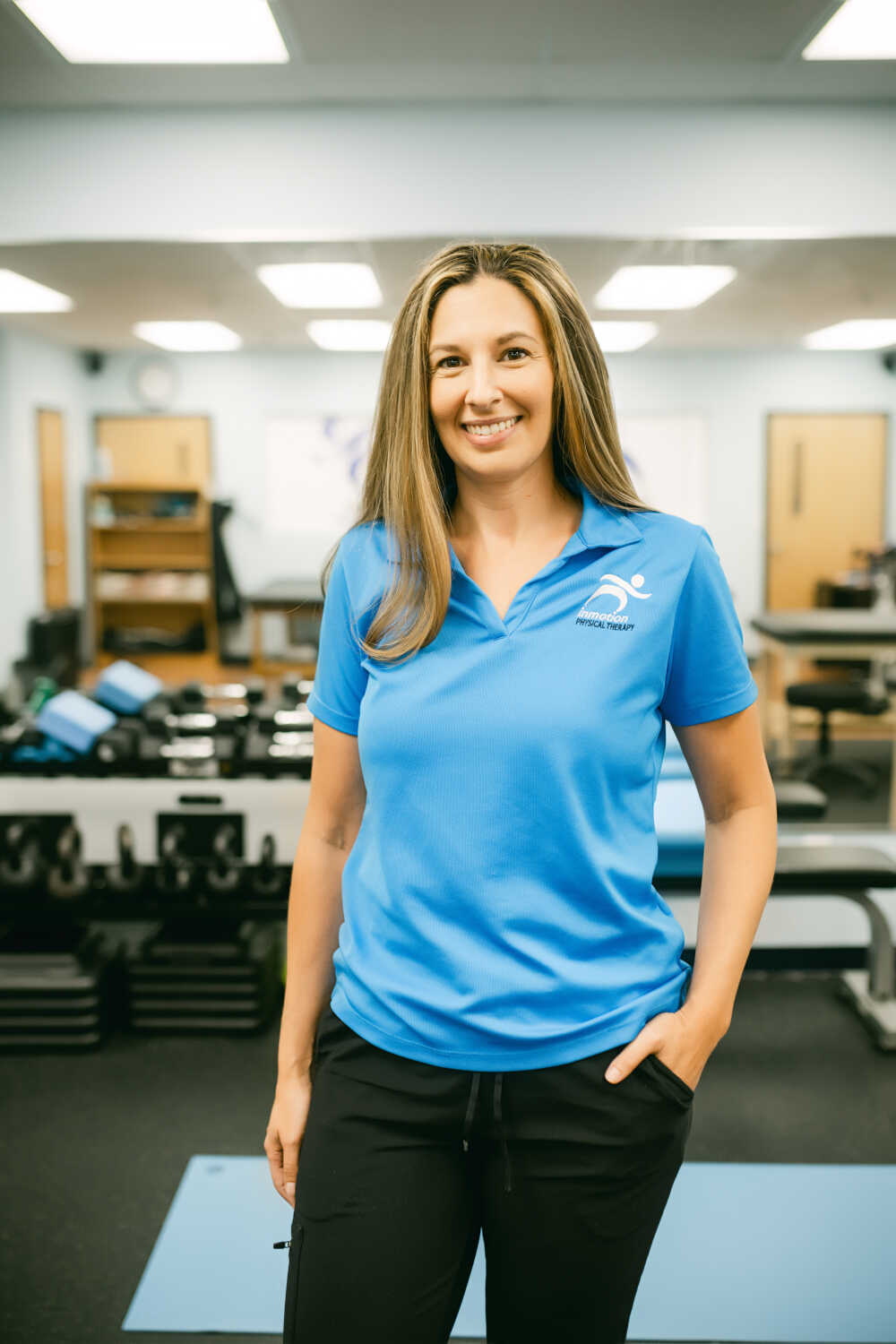
Laura Sommer has been practicing as a Physical Therapist since 2011. She graduated from Northeastern University, where she was a member of the Women’s Soccer Team. Laura is the owner of In Motion Physical Therapy located in Farmingdale, NY.