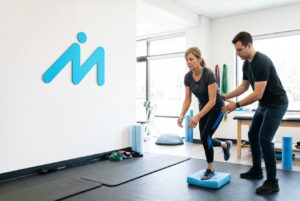
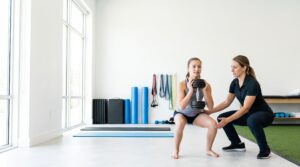
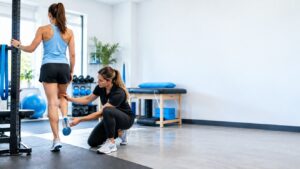
Whether you should do Pilates before or after running depends on your goal. Pre-run Pilates activates deep stabilizers, improves form, and reduces injury risk. Post-run Pilates aids recovery, restores flexibility, and resets your posture. Both approaches have merit — the best choice depends on your training phase and what your body needs that day. Runners near Farmingdale, NY can work with a sports physical therapist and Pilates instructor at In Motion Physical Therapy for a personalized movement plan.
Whether you’re training for a local Farmingdale 5K or just trying to stay active without your knees screaming at you, you’ve likely wondered: is it better to do Pilates before or after running?
It’s a great question — and one I get from runners almost every week in the clinic.
As a Doctor of Physical Therapy and Pilates instructor at In Motion Physical Therapy, I work with runners every day who use Pilates to build the strong, stable core and hips they need to stay healthy on the road. While there isn’t one “wrong” answer, the best timing depends entirely on what you’re trying to accomplish: a performance-boosting warm-up, or a deep recovery session.
This post breaks down exactly how to time your sessions so you can stop guessing and start moving better.
→ Learn more about how Reformer Pilates can help your running.
What Happens to Your Body When You Run?
Before we answer the Pilates before or after running question, it helps to understand what running actually does to your body.
Running is a repetitive, high-impact activity. Every mile you run, your foot strikes the ground roughly 1,500 times. Each strike sends force up through your foot, ankle, knee, hip, and into your spine. If your core isn’t firing properly, your hips drop, your knees cave, and your lower back compensates — which is exactly how overuse injuries like IT band syndrome, runner’s knee, and stress fractures develop.
That’s where Pilates comes in. Pilates specifically targets the deep stabilizing muscles — your transverse abdominis, glute medius, and hip rotators — that running alone doesn’t build. Think of Pilates as filling in the gaps that miles on the road leave behind.
Is Pilates Better Before Running?
Doing Pilates before you hit the pavement acts as a high-level dynamic warm-up. It “wakes up” your deep stabilizers to help your joints move efficiently from the very first step, rather than spending the first mile fighting through stiffness and compensation.
This approach is best for runners who struggle with heavy legs, lower back tightness, or hip drop mid-run. A short, focused pre-run Pilates session essentially primes your neuromuscular system — meaning your brain and muscles learn to talk to each other more efficiently before the real work begins.
Best for: Runners who want to run with better form, reduce mid-run fatigue, or prevent lower body injuries.
Pro Tip: Keep pre-run Pilates to 15–20 minutes. The goal is activation, not exhaustion. Save the harder core work for after.
The Best Pilates Exercises to Do After Running
Exercise #1: Footwork on the Reformer
How to do it: Lie on your back on the Reformer with the balls of your feet on the footbar, heels as low as possible and hip-width apart. Keeping your heels dropped, bend your knees to bring the carriage all the way in, then press the footbar away to full extension. Perform 10–15 slow, controlled reps.
Why it works for runners: This is one of the best exercises in existence for post-run calf and Achilles recovery. The lowered heel position puts your calf and Achilles tendon under a gentle, sustained stretch throughout the entire movement. Over time, this reduces the tightness that contributes to plantar fasciitis, Achilles tendinopathy, and shin splints.
Exercise #2: Feet in Straps on the Reformer
How to do it: Lie on your back on the carriage and place your feet in the foot straps with your legs extended toward the ceiling. Keep your back flat on the carriage throughout. From here, squeeze your hamstrings and glutes to pull your legs down toward the footbar as far as you can while keeping your back flat. Slowly and with control, return your legs to the starting position.
Why it works for runners: Running keeps your hamstrings in a shortened, contracted position for miles at a time. This exercise does two things simultaneously: it gives your hamstrings a deep stretch at the top, and it forces them to work eccentrically as they control the return — which is exactly the muscle action that prevents hamstring strains and helps rebuild tissue that’s been under repetitive stress.
Exercise #3: Reformer Lunge
How to do it: Stand to the right of the carriage, facing the footbar. Place both hands on the footbar and your left foot on the carriage against the shoulder pad. Your right foot stays on the ground. Use your left foot to push the carriage back, extending that knee, while you sit deeper into a bend on your right leg. Perform 8–10 reps on each side.
Why it works for runners: This exercise hits three of the most chronically tight areas in runners all at once: the hamstrings and glutes of the standing leg, and the hip flexor of the moving leg. Tight hip flexors are one of the most underappreciated contributors to lower back pain in runners. This one exercise addresses all of it in one controlled, functional movement.
Can You Do Pilates Before and After Running on the Same Day?
Yes — with intention. If you’re doing a long or hard workout, a short activation session before (15–20 minutes) and a gentle recovery session after (15–20 minutes focused on breathwork and stretching) is an excellent combination. Just make sure the pre-run work stays activation-focused and doesn’t pre-fatigue your stabilizers.
If you’re short on time, prioritize based on your current biggest need. Dealing with form breakdown or injury history? Do it before. Beat up and tight after miles? Do it after. When in doubt, after is usually the safer default because most runners skip recovery work entirely.
Pilates Before or After Running: A Quick Reference
Goal
When to Do Pilates
Improve running form
Before
Prevent IT band or knee pain
Before
Reduce post-run tightness
After
Speed up recovery between runs
After
Long run day
After (or both)
Race prep day
Before (short, activation-focused)
FAQ: Pilates Before or After Running
Can Pilates help prevent running injuries?
Is it safe to do Pilates after a hard run?
Should I do Pilates before a long run?
How many times a week should a runner do Pilates?
Do I need a Reformer, or can I do mat Pilates?
Final Thoughts: Pilates Before or After Running
Ultimately, the best time for Pilates before or after running is the time that fits your schedule and that you’ll actually do consistently. If you want to feel powerful and stable during your run, do it before. If you want to feel looser and more recovered the next day, do it after. Both work. Both help. What matters most is that you do it.
As a physical therapist and Pilates instructor, my favorite approach for runners is a short activation warm-up before hard effort days, and a full recovery session after long runs. Over time, this combination builds the kind of resilient, efficient body that stays healthy for the long haul — so you can keep running the miles that matter to you.
If you’re looking for sports-specific Pilates or physical therapy near Farmingdale, NY, we’d love to work with you at In Motion Physical Therapy. Whether you’re dealing with a current injury or just want to run smarter, we build individualized programs that fit your sport and your goals.
This blog post provides general information and should not be considered a substitute for professional medical advice. If you have specific concerns or a current injury, consult with your healthcare provider before beginning any new exercise program.
Next on Your Reading List:
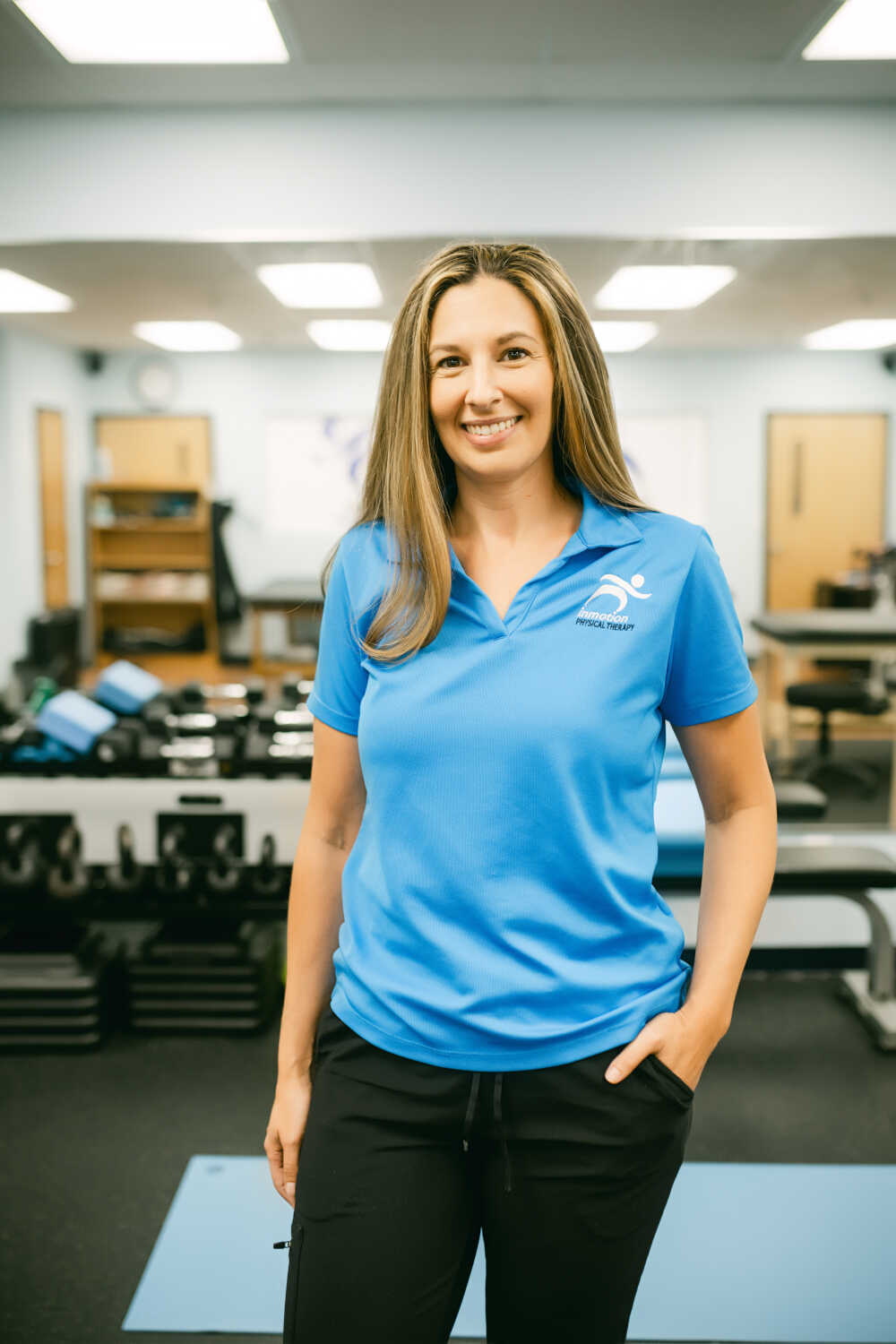
Laura Sommer has been practicing as a Physical Therapist since 2011. She graduated from Northeastern University, where she was a member of the Women’s Soccer Team. Laura is the owner of In Motion Physical Therapy located in Farmingdale, NY.