Lower back pain from golf is one of the most common complaints we treat at In Motion Physical Therapy in Farmingdale, NY. The good news: in most cases, it is not the game that is the problem. It is the way your body is moving through the swing. With the right treatment and movement corrections, most golfers can get back on the course and play without pain.
Treating Lower Back Pain from Golf
You finally finished your round at Bethpage or one of the local courses on Long Island. You played 18 holes, hit a few great shots, and by the time you got back to the parking lot, the real story started. That slow, stiff crawl out of the driver’s seat. Your lower back is locked up, you are walking like you are 20 years older than you are, and you are wondering if you are going to feel this all week.
Sound familiar?
If you are a golfer dealing with lower back pain after your round, you are in good company. Research shows that low back pain is the most common musculoskeletal complaint in golfers, affecting anywhere from 18 to 54 percent of amateur players. But you do not have to just rest and wait it out. And you definitely do not have to quit the game.
This guide covers what to do right after your round to get some relief, why the pain keeps coming back, and what treating lower back pain from golf actually looks like at a sports physical therapy clinic like ours in Farmingdale.
What to do Right After Your Round
The first 24 hours after a round matter. A lot of golfers make the mistake of either doing nothing (collapsing on the couch) or overdoing it with ice and anti-inflammatories and hoping for the best. Neither one actually fixes anything.
Here is what we recommend instead.
Keep Moving, Gently
Your spine does not want total rest. After a round of golf, your lower back muscles are fatigued and compressed from hours of rotation and load. Gentle movement helps pump fluid back into the spinal discs and relax the muscles that are in protective spasm. A short walk, some easy movement in the yard, or light stretching is a much better choice than lying flat on the couch.
Try This: The Open Book Stretch
Lie on your side with your knees stacked and bent to about 90 degrees. Extend your arms out in front of you at shoulder height. Keeping your bottom knee on the floor, slowly rotate your top arm open toward the ceiling and let it fall toward the floor on the other side. Hold for a breath or two and return. This drill opens up your thoracic spine (the mid-back), which is exactly what gets compressed and stiff after a round. Do 5 to 8 reps on each side.
Try This: The 90/90 Hip Switch
Sit on the floor with both knees bent to 90 degrees, one in front of you and one out to the side. Keeping your back tall, slowly rotate your hips and switch the position of your legs to the other side. This helps decompress the lumbar spine and restore some of the hip rotation your swing was demanding all day. Do 8 to 10 reps slowly.
Use Heat, Not Ice
For general stiffness and achiness after golf, heat is typically more helpful than ice. Heat increases blood flow and helps tight muscles relax. Ice is better suited for acute injuries with swelling. If you are just stiff and achy after your round, a heating pad on the lower back for 15 to 20 minutes while you do your stretches is a solid place to start.
Why Lower Back Pain from Golf Keeps Coming Back
Here is the question that matters most: why does this keep happening? If you have dealt with post-round back pain more than once or twice, there is almost always a mechanical reason. And it is usually not the back itself that is the original problem.
The Lead Hip Issue (And Both Hips, Really)
Your lower back is rarely the true source of the problem. Most of the time, it hurts because it is being asked to do work that other parts of your body are supposed to handle. When your hips cannot rotate freely, especially the internal rotation needed during your backswing and follow-through, your lumbar spine tries to make up the difference. It overworks, gets worn out, and starts to ache.
According to TPI research, hip internal rotation restriction is one of the five most common physical causes of golf-related lower back pain. If your hips are stuck, your spine will try to twist too much to finish the swing. That is not a back problem. That is a hip problem your back is paying for.
This pattern is extremely common in golfers who spend a lot of time sitting during the week, and it becomes more noticeable with age. Tight hip flexors and restricted internal hip rotation are among the most consistent findings we see when we assess golfers with chronic back pain at In Motion.
The Reverse Spine Angle: The Single Biggest Risk Factor
Of all the swing habits linked to lower back pain, one stands above the rest. TPI research identifies the reverse spine angle as the number one mechanical cause of golf-related back pain. This is a backward lean of the upper body toward the target during the backswing. It creates enormous compressive and shear force on the lumbar spine at the exact moment of impact, when club head speed peaks.
If you have ever been told your swing collapses at the top, or if you have seen your backswing on video and noticed your upper body tipping toward the target, this may be a significant driver of your pain.
Another high-risk pattern is excessive lateral sway, where the pelvis shifts away from the target during the backswing instead of rotating. TPI biomechanics research shows that side-bending 30 percent beyond normal ranges significantly increases spinal loading and injury risk. A swing that looks powerful can quietly be grinding down your lumbar spine over thousands of repetitions.
Your Upper Back Is Built to Turn. Your Lower Back Is Not.
This is one of the most important things to understand about golf and back pain, and it directly contradicts what many golfers instinctively try to do. The thoracic spine (your mid-back) is designed for rotation. The lumbar spine is not. It is built for stability and a small amount of forward and backward bending, but it is not meant to twist.
When the thoracic spine is stiff and cannot rotate freely, the lumbar spine compensates and tries to pick up that rotation. Over time, this excessive lumbar rotation does not just cause soreness. Research suggests it creates real stress on the intervertebral discs, the cushions between the vertebrae. This is why telling a golfer to “twist through your waist” to get more power is, biomechanically speaking, one of the worst cues in golf.
Restoring thoracic rotation is one of the core targets of golf-specific physical therapy. It is also why the Open Book stretch described above works so well right after a round.
Core Stability Is Not the Same as Core Strength
A lot of golfers have been told to strengthen their core. The problem is that the kind of core training most people do, things like crunches and sit-ups, does not train the specific quality a golf swing demands.
What protects your back during a swing is not raw strength. It is stability: the ability of your deep spinal muscles to resist movement and keep your spine in a safe position while your body generates and transfers power at high speed. Your core acts like a shield. If it fires correctly, it absorbs and distributes force. If it does not, the lumbar spine takes that force directly.
Generic core exercises do not train this. A well-designed golf rehabilitation program trains the anti-rotation and anti-lateral-flexion demands of the swing, building the stability that actually keeps your back healthy under load.
What Your Life Off the Course Is Doing to Your Back
This one surprises a lot of golfers. Your pain is not only about what happens during your round. TPI research points to lifestyle factors as significant contributors to golf-related back pain that have nothing to do with swing mechanics.
Poor sleep reduces the body’s ability to recover from the load of a round and drives up inflammation systemically. Chronic stress increases baseline muscle tension, particularly through the paraspinal muscles. Excess body weight, especially around the abdomen, pulls the pelvis into an anterior tilt, which increases the curve of the lumbar spine and puts it in a chronically loaded position before you even take your first swing.
None of this means you need to overhaul your entire life to play pain-free. But it does mean that if you are sleeping poorly, under a lot of stress, or carrying some extra weight, your back is starting every round at a disadvantage. These are things we talk through as part of your overall care plan at In Motion.
How We Treat Lower Back Pain from Golf at In Motion Physical Therapy
This is where things get specific. Treating lower back pain from golf is not about putting someone on a table and running through generic back exercises. Our approach starts by figuring out why the pain is happening in the first place. For golfers, that almost always means looking at the whole body, not just the back.
The Golf-Specific Movement Assessment
Because we are TPI-certified, our first goal is to connect your physical limitations to your actual swing. We screen for mobility and stability at every relevant joint, including ankles, hips, thoracic spine, and shoulders, and identify which physical deficits are showing up as compensations in your movement pattern. This is not guesswork. There are well-established links between specific physical limitations and specific swing faults, and knowing which one you have tells us exactly where to focus.
Manual Therapy: Getting the Joints Moving
If your joints are stiff, no amount of stretching or exercise will fully fix the problem until mobility is restored. We use joint mobilization techniques to manually improve movement at the thoracic spine, hips, and lumbar spine when indicated. This is hands-on treatment where the therapist moves the joint through its range to restore normal mechanics.
We also use IASTM (instrument-assisted soft tissue mobilization, which some patients call “scraping”) to address the tight, restricted soft tissue around the hips and lumbar spine. It feels like deep, focused pressure along the muscle belly, and it is very effective at improving how muscles move and communicate with the nervous system.
BFR Training for Core and Hip Strengthening
One of the tools we use at In Motion that many golfers have never encountered is blood flow restriction training, or BFR. BFR allows us to build significant strength in the hip stabilizers at very low loads. That means we can work the right muscles without putting excessive stress on the back while it is still healing. For golfers who want to maintain function and not lose ground while recovering, this approach makes a real difference.
Marc Pro Electrical Stimulation
For golfers dealing with significant muscle fatigue and soreness after their rounds, we sometimes use Marc Pro electrical stimulation to accelerate muscle recovery between treatment sessions. It helps clear the metabolic byproducts of heavy muscle use faster than rest alone, which means you bounce back quicker between rounds or between treatment visits.
Golf-Specific Exercise Progression
Once we have restored mobility and addressed the soft tissue restrictions, we build a strength and stability program that is specific to your swing demands. This includes:
- Deep core stabilization work that trains the muscles your swing actually uses
- Hip strength and rotation work focused on the lead hip
- Thoracic rotation mobility drills that carry over directly to your backswing and follow-through
- Movement pattern retraining so your body stops defaulting to the compensations that caused the pain in the first place
The goal is not just pain relief. The goal is that you walk off the 18th hole feeling as good as you did on the first tee.
When to Go See A Physical Therapist
Mild stiffness and achiness after a round is common. But there are some signs that tell us the problem needs professional attention sooner rather than later.
Come in if:
- Your pain lasts more than 48 hours after your round
- You feel pain, numbness, or tingling that travels down one leg
- You are waking up at night with back pain
- You notice weakness in your leg or foot
- The pain is getting worse over multiple rounds, not better
Pain that radiates down the leg could be a sign of nerve involvement, either from a disc or from the nerve roots in the lumbar spine. That needs to be properly evaluated. Do not try to stretch or exercise your way through it without knowing what you are dealing with.
Sick of playing through back pain?
At In Motion Physical Therapy in Farmingdale, NY, we offer a Golf Performance Evaluation that connects your physical limitations directly to your swing mechanics. We find the root cause, not just the symptom, and we build a plan that gets you back on the course and keeps you there.
Frequently Asked Questions About Treating Lower Back Pain from Golf
Can I keep playing golf while treating lower back pain?
How long does it take to recover from golf-related lower back pain?
Is this just because I am getting older?
What is the difference between golf physical therapy and regular physical therapy?
Next on Your Reading List:
-
Is Golfing Bad for Your Back? What Every Farmingdale Golfer Needs to Know
-
TPI Golf Screening with a Physical Therapist: How to Add 15+ Yards to Your Drive
-
How to Increase Distance in Golf: 5 Physical Therapy Tips for Golfers Over 50
-
8 Quick and Easy Golf Warm-Up Exercises for Seniors
-
Should I Play Golf with Lower Back Pain? A Physical Therapist's Guide
Note: This blog post provides general information and should not be considered a substitute for professional medical advice. If you have any concerns or specific conditions, consult with your healthcare provider before making changes to your recovery routine.
References:
Lindsay DM, Vandervoort AA. Golf-related low back pain: a review of causative factors and prevention strategies. Asian Journal of Sports Medicine. 2014; https://pmc.ncbi.nlm.nih.gov/articles/PMC4335481/
Titleist Performance Institute. The Most Important Considerations for Treating Golfers With Lower Back Pain. 2026. https://www.mytpi.com
Titleist Performance Institute. Limiting Side Bend for David Puig: Biomechanics Case Study. 2026. https://www.mytpi.com
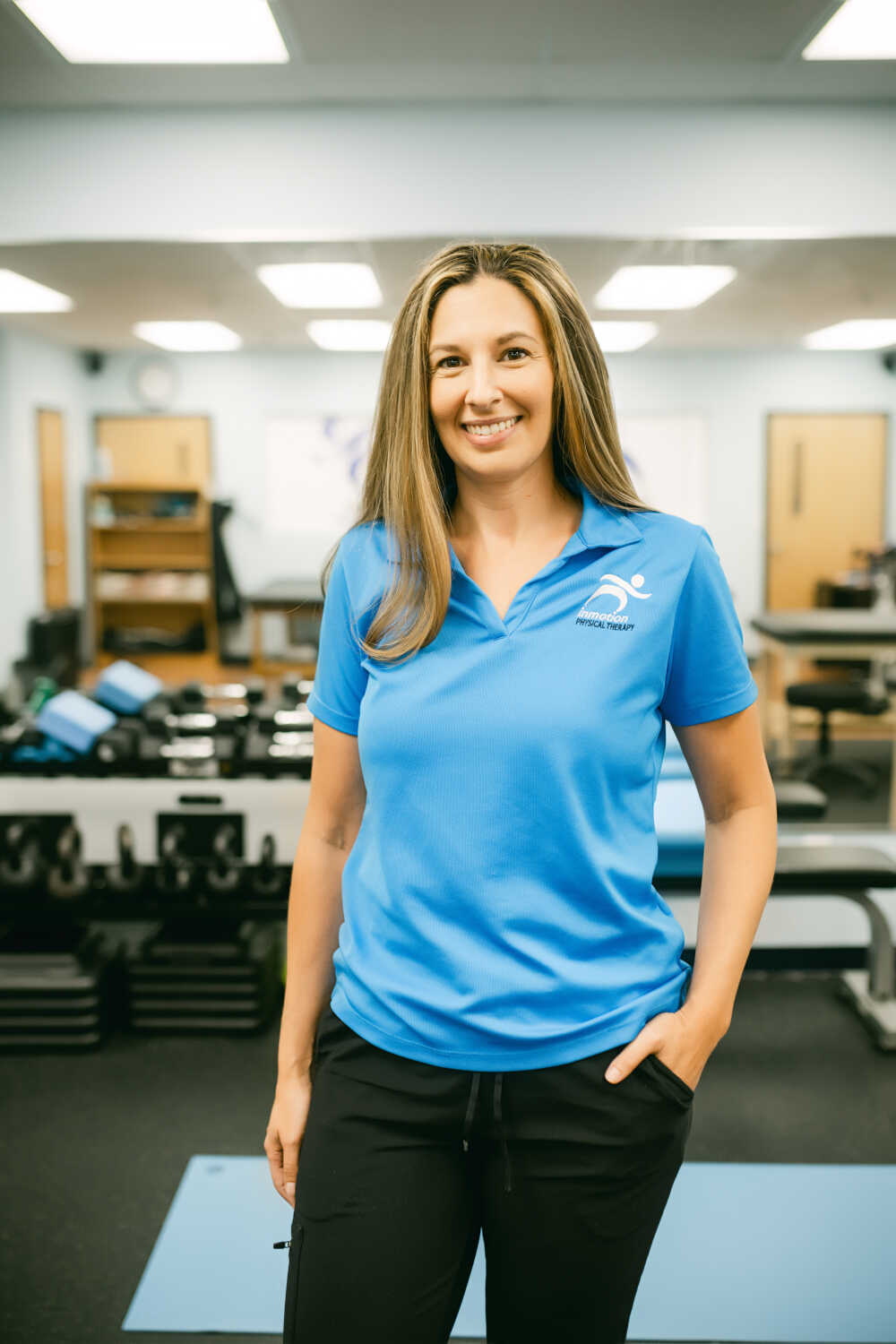
Laura Sommer has been practicing as a Physical Therapist since 2011. She graduated from Northeastern University, where she was a member of the Women’s Soccer Team. Laura is the owner of In Motion Physical Therapy located in Farmingdale, NY.