Every athlete knows the frustration that comes with a sudden injury. One moment you are pushing your limits on the field or finishing a long run through Farmingdale, and the next, you are sidelined. The first question that leaps to mind is almost always the same: how long until I can get back to what I love?
At In Motion Physical Therapy, we understand that drive to return to peak performance. You are not just a patient — you are an athlete with specific goals. Whether you play lacrosse, golf, or compete in gymnastics, understanding what to expect from the recovery process is the first step toward a confident comeback.
The Phases of Healing: What Your Body Is Doing
Recovery is a biological process that follows a predictable sequence. Physical therapy works by guiding each phase as effectively as possible.
First comes the acute inflammatory phase, where your body rushes to protect the injured area. This is typically when swelling and sensitivity are at their peak. Next, the repair phase begins, during which your body lays down new collagen and tissue. Finally, the remodeling phase strengthens and organizes that new tissue so it can handle the demands of your sport.
Without proper guidance, this process can stall or result in weaker scar tissue that increases your risk of re-injury. The physical therapists at In Motion Physical Therapy work to ensure each phase progresses optimally, bridging the gap between initial healing and high-level performance.
What Factors Influence How Quickly You Recover?
The type of injury sets a baseline timeline, but several other variables play a significant role in how fast you progress. At In Motion Physical Therapy, these are the factors we actively work to optimize.
- Injury severity: A minor strain will naturally resolve faster than a complex ligament tear or a post-surgical recovery.
- Consistency: Your commitment to the prescribed plan, both in the clinic and at home, is one of the most important drivers of progress.
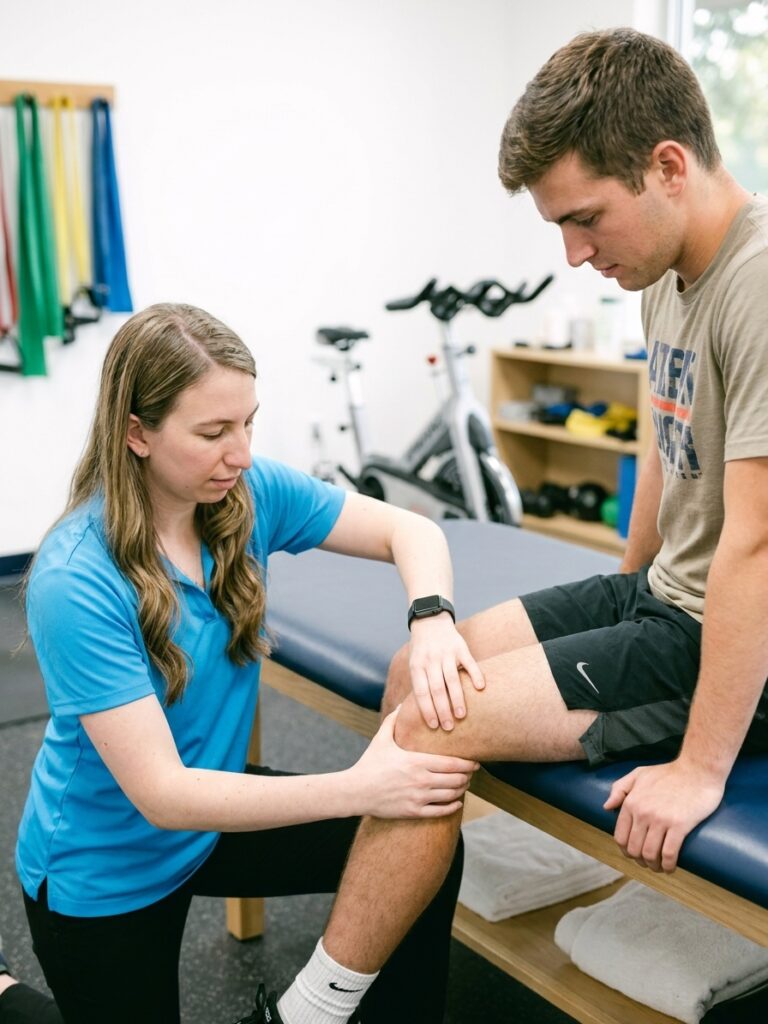
- Personalized, one-on-one care: Every session at In Motion Physical Therapy is conducted directly with a physical therapist. Your program is adjusted as you improve, ensuring nothing is left to guesswork.
- Specialized treatment modalities: Tools like Blood Flow Restriction (BFR), Manual Therapy, Myofascial Release, and Neuromuscular Re-Education can stimulate healing and rebuild strength even in the early stages of recovery.
Recovery Timelines for Common Injuries
Every injury is unique, but the following benchmarks reflect general clinical expectations for some of the most common conditions treated at In Motion Physical Therapy.
Knee and Lower Extremity Injuries
ACL injuries are among the most significant setbacks an athlete can face. A full return to competitive sport typically takes 6 to 12 months and involves progressive strengthening, Plyometrics and Return-to-Sport Progressions, and formal Return-to-Sport Testing to confirm the knee can handle cutting, pivoting, and jumping.
Runner’s Knee (patellofemoral pain) often responds well within 4 to 8 weeks when treatment targets hip strength, movement mechanics, and load management. Ankle sprains at a moderate severity generally require 2 to 8 weeks of rehabilitation, with a strong emphasis on Balance and Proprioception Training to restore stability and reduce the risk of re-injury.
Other lower extremity conditions treated at In Motion Physical Therapy include IT Band Syndrome, Hamstring Strains, Achilles Tendinopathy, Plantar Fasciitis, and Hip Impingement (FAI).
Shoulder and Upper Extremity Injuries
Shoulder Impingement and Rotator Cuff Pain typically require 6 to 12 weeks of focused rehabilitation, though timelines vary depending on the severity of the condition and the physical demands of your sport. Treatment often includes Joint Mobilization, Soft Tissue Mobilization, and targeted Therapeutic Exercise to restore range of motion and rebuild strength.
Conditions such as Tennis Elbow, Golfer’s Elbow, Carpal Tunnel, and Frozen Shoulder are also commonly treated, with timelines that depend on how long the condition has been present and how the tissue responds to treatment.
Spine and Back Pain
Low Back Pain and Sciatica are among the most common reasons people seek physical therapy. Mild to moderate cases often show meaningful improvement within 4 to 8 weeks. More persistent or complex presentations may require a longer course of care. Neck Pain and Mid Back Pain follow similar patterns, with treatment focused on restoring mobility, reducing muscle tension, and building the postural strength needed to prevent recurrence.
Going Beyond Recovery: Returning Stronger
At In Motion Physical Therapy, the goal is not simply to get you out of pain. It is to return you to full performance with a lower risk of future injury.
Performance Physical Therapy and Sports Physical Therapy are core specialties at the clinic, meaning treatment is designed around the specific biomechanical demands of your activity. A Functional Movement Assessment helps identify the underlying movement deficiencies that contributed to the injury in the first place.
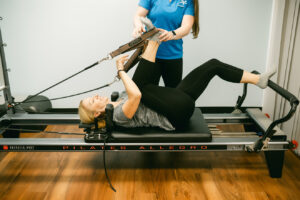
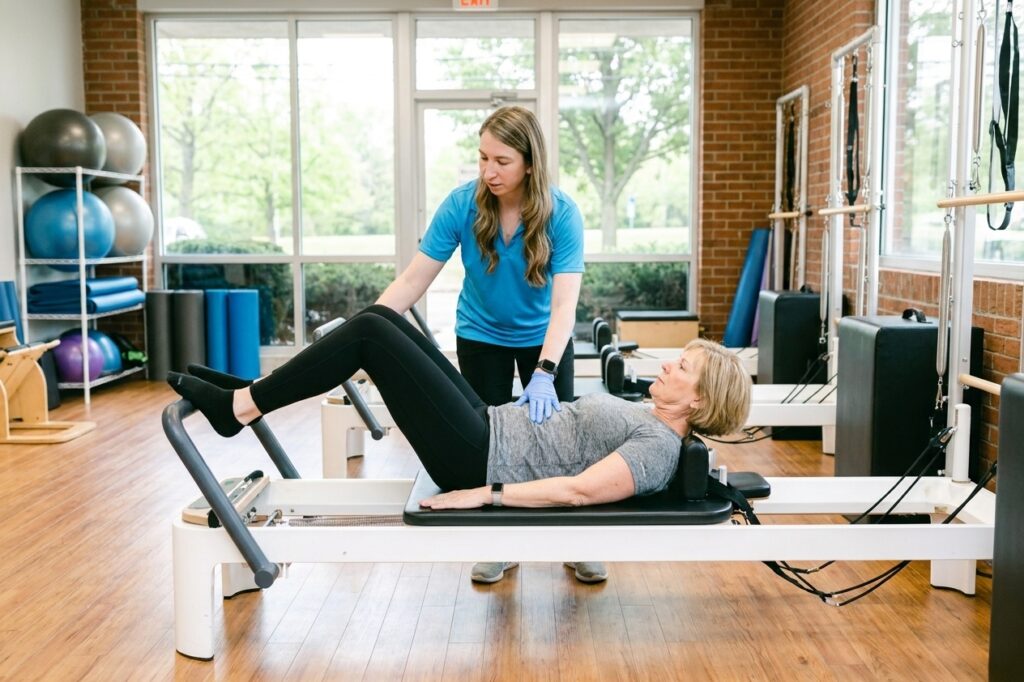
Pilates is integrated into recovery programs to build deep core strength, improve flexibility, and reinforce movement quality. This is particularly valuable for athletes whose sports require precise body control, such as gymnastics, dance, and golf. For golfers specifically, Titleist Performance Institute (TPI) Testing is available to evaluate swing mechanics and identify physical limitations that may be affecting both performance and injury risk.
For those preparing for a return to running, Return-to-Running progressions are built into the plan to ensure a safe and structured reintroduction to mileage and intensity.
Prehab: Getting Ahead of Injury Before It Happens
Not every visit to In Motion Physical Therapy starts with an injury. Prehabilitation services are available for athletes who want to identify and address physical vulnerabilities before the season begins or before a planned surgery. A Movement Screen or Isokinetic and Dynamometer Testing can reveal strength imbalances and mobility restrictions that, left unaddressed, often lead to injury down the road.
Investing in prehab is one of the most effective strategies for staying healthy and performing at your best throughout a full competitive season.
Start Your Recovery with a Clear Plan
The timeline for physical therapy depends on your injury, your goals, and how consistently you engage with the process. What does not have to be uncertain is the quality of care guiding you through it.
At In Motion Physical Therapy in Farmingdale, NY, every patient receives individualized, one-on-one treatment built around their specific condition and performance goals. From the first evaluation through Return-to-Sport Testing, the focus is on getting you back to full strength safely and efficiently.
Ready to take the first step? Contact In Motion Physical Therapy to schedule your evaluation and begin a personalized recovery plan built around your goals.