I Thought I Knew What I Was Getting Into. I Was Wrong.
It was 2010, and I was skiing in Western Massachusetts with my best friend’s family over winter break. I was making wide, cautious turns to avoid a snowboarder who kept falling in front of me, waiting for the perfect moment to pass him safely.
Then, out of nowhere, my ski tip caught under his board as he tried to cut me off.
He fell. My ski went flying. So did I.
As I lay there in the snow, I thought to myself: “OMG, I just tore my ACL.”
The snowboarder took one look at me, got up, and went on his way. I tried to stand. I couldn’t. A couple saw me in distress and flagged down ski patrol. I refused the sled (because I’m stubborn like that) and sat on the back of the patrol as they took me down the mountain.
At the hospital: no fracture. No MRI. No additional scans.
My dad knew something was seriously wrong and immediately drove 4 hours to come get me. The next day, my mom took me to the orthopedist. Still no MRI. Since I was walking, they told me I had a torn MCL and sent me on my way.
I was so relieved. It was one of those rare moments when I was happy to be wrong.
Except I wasn’t wrong.
“I know that feeling of being the one the coach counts on, and then suddenly being told you’re out for the season. It’s not just a knee injury—it’s an identity crisis.”
Here’s the Thing No One Tells You: It’s More Than Just a Knee Injury
If you’re a high school athlete reading this, you probably define yourself by your sport. You’re not just on the soccer team or gymnastics team—you are an athlete. That’s your identity.
So when someone tells you that you need ACL surgery and you’ll be out for 6-9 months, it’s not just about the physical recovery. It’s about feeling like no one gets how serious you are about your sport.
It’s about the fear that your coach will forget about you. That your teammates will move on without you. That you’ll lose your starting position.
I felt all of that. And I was in my last year of PT school—I wasn’t even competing anymore. But that athlete mindset doesn’t just disappear.
What I wish I knew: It’s okay to feel frustrated, scared, and like your entire world just turned upside down. That’s normal. Your injury doesn’t define your future in sports—but how you recover from it will set the foundation for the rest of your athletic career.
Things I Wish I Knew Before ACL Surgery: The Prehab Part
Here’s what most athletes think happens: you get injured, you schedule surgery, you sit around until surgery day, then you start rehab.
That’s a mistake.
Because I was in PT school and had access to research, I spent weeks diving into ACL studies. I did my own prehab. I kept going to the gym. I ran three miles the day before my surgery because I knew it would be a long time before I’d run again.
But here’s the thing: no one told me to do prehab. Not the surgeon. Not the orthopedist. I had to figure it out on my own.
Looking back, I’m so glad I stayed active before surgery. The stronger you are going into surgery, the faster your “get back on the field” journey will be.
If I could go back and tell my younger self one thing, it would be this: Find a physical therapist who specializes in athletes and start working with them before surgery. Strengthen your quads, hamstrings, and glutes. Work on single-leg balance. Build that foundation now, because it’s going to make everything easier later.
The Recovery Timeline Isn’t What You Think It Is
I was young. I was healthy. I was a PT student. I thought, “I’ve got this. Recovery will be fine.”
I was so wrong.
The first four weeks after surgery were brutal. The pain was worse than I expected—especially at night. Sleeping was miserable. I completely underestimated how painful it would be just to exist in those first few weeks.
I also underestimated how long it would take to feel “normal” again.
- I was off crutches in a few days.
- But it took 4-6 months before I had no swelling after being on my feet all day.
- It took 4-6 months before I could fully bend my knee when kneeling without discomfort.
- I didn’t start running again until about 6 months post-op.
And here’s the kicker: the sensation around my scar has never come back. Even now, years later, that area feels numb.
There were bad days. One day, after I coached a soccer practice during my recovery, I was so frustrated that it was still so difficult for me to do “normal” things. I felt like I wasn’t progressing.
What I wish I knew: Recovery isn’t linear. There will be days where you feel like you’re taking two steps forward and one step back. That’s normal. The timeline your surgeon gives you is a guideline, not a guarantee. Your body will tell you when it’s ready—and you have to listen to it.
Read more about realistic ACL reconstruction healing timelines here
You Need an Athlete-Specific Physical Therapist (Trust Me on This)
I worked with a physical therapist for the first six weeks after my surgery.
They were fine. They got me through the basics—range of motion, basic strengthening, walking without crutches.
But they weren’t athlete-focused.
And here’s what I realized: most physical therapy patients aren’t trying to return to a varsity soccer field or a competitive gymnastics floor. They just want to walk up stairs without pain or get back to their desk job.
That’s not you.
You’re trying to cut on a dime without your knee buckling. You’re trying to land a tumbling pass or sprint down the field without hesitation. You need someone who understands the difference between “functional” and “performance-ready.”
After six weeks, I had to do my own research to figure out how to progress my exercises to meet my specific goals. I basically rehabbed myself because I didn’t have guidance on how to get from “walking normally” to “running three miles” to “playing pickup soccer without fear.”
That’s when I realized: regular PT and return-to-sport PT are not the same thing.
Here’s what athlete-specific physical therapy looks like:
✅ Progressive loading that prepares you for the demands of your sport
✅ Sport-specific movements (cutting, pivoting, jumping, landing mechanics)
✅ Performance benchmarks—not just “can you walk without pain,” but “can you pass the hop test? Can you sprint at full speed? Can you cut without hesitation?”
✅ Mental preparation for returning to competition (because the fear of re-injury is real)
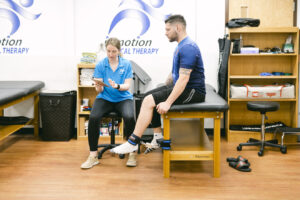
At In Motion Physical Therapy in Farmingdale, NY, we work specifically with competitive athletes who need more than basic rehab. Because we’ve been in your shoes—literally. We know what it’s like to be told you’re “cleared” when you still don’t feel ready. We know what it’s like to do the research yourself because no one else is giving you the answers you need.
The Maintenance No One Warns You About
Here’s something I wish someone had told me: ACL recovery doesn’t end when you’re “cleared to play.”
Even now, years after my surgery, I have to do constant maintenance to keep that leg strong. It definitely feels more “unsteady” than my other side, so I work on balance and strength exercises weekly.
If I skip it for a few weeks, I notice the difference.
This isn’t a bad thing—it just means that if you want to stay at the top of your game, you have to treat your body like the high-performance machine it is. Strength training, balance work, and mobility aren’t “extras”—they’re essential.
What This Experience Taught Me as a Physical Therapist
Going through ACL surgery made me a better PT.
It taught me empathy for every patient who walks through my door after surgery. I know what that first week feels like. I know the frustration of not progressing as fast as you want. I know the fear of stepping back onto the field for the first time.
And most importantly, it taught me that athletes deserve physical therapists who understand their goals.
You’re not just trying to “get better.” You’re trying to get back to being the athlete your team counts on.
Frequently Asked Questions about ACL Surgery
How long does ACL surgery recovery take for athletes?
Should I do physical therapy before ACL surgery?
What's the difference between regular PT and athlete-specific PT after ACL surgery?
Have Questions About Your Own ACL Recovery?
If you’re facing ACL surgery—or you’re already in recovery and feel like you’re not getting the guidance you need—I’d love to help.
As someone who has been exactly where you are, I know how isolating and overwhelming this process can feel. You don’t have to figure it out on your own.
Contact In Motion Physical Therapy in Farmingdale, NY to chat with a PT who has literally been in your shoes (or ski boots, in my case). Let’s create a plan that gets you back to your sport—stronger, smarter, and ready to compete.
Note: This blog post provides general information and should not be considered a substitute for professional medical advice. If you have any concerns or specific conditions, consult with your healthcare provider before starting any exercise program.
Learn more about ACL Surgery
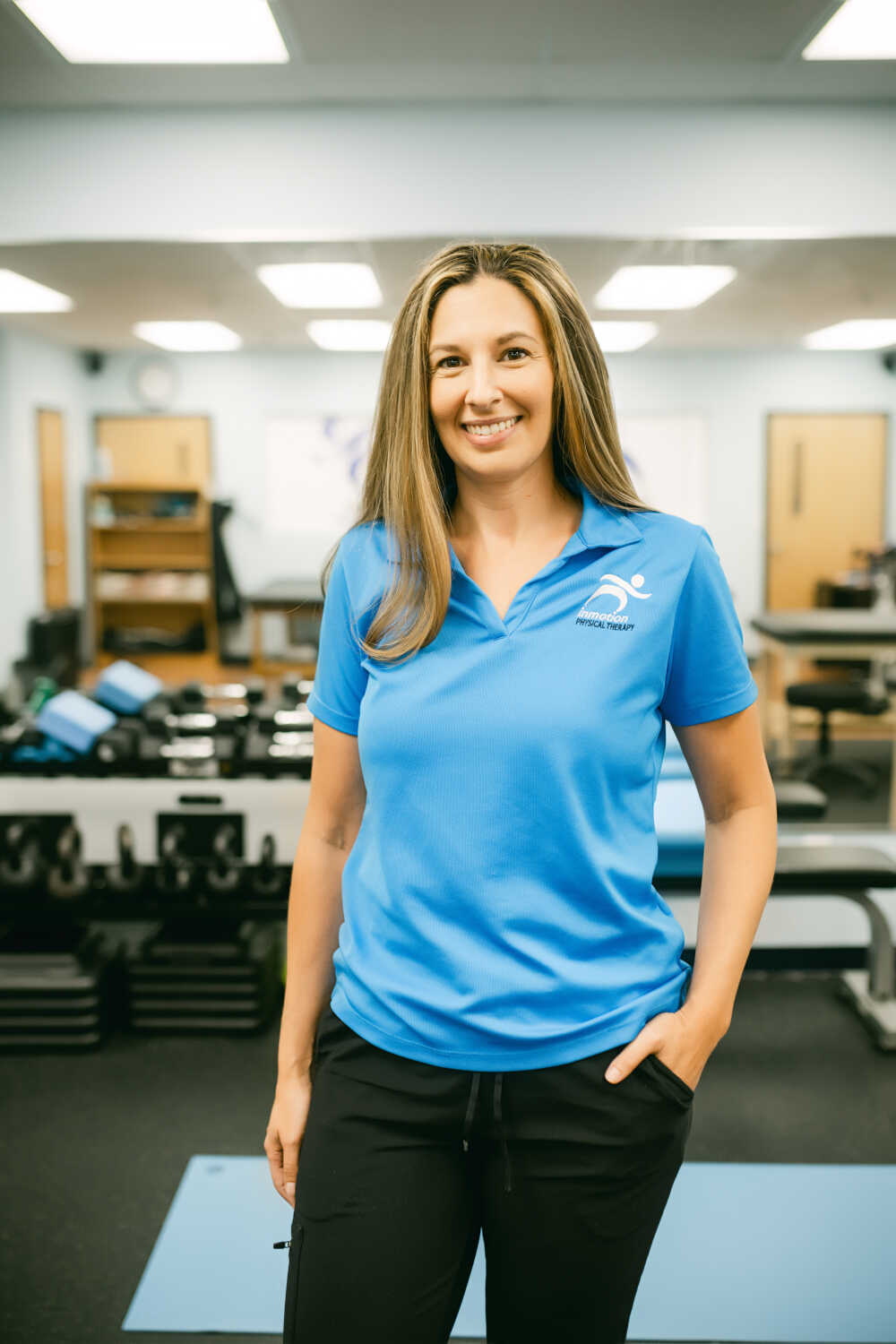
Laura Sommer has been practicing as a Physical Therapist since 2011. She graduated from Northeastern University, where she was a member of the Women’s Soccer Team. Laura is the owner of In Motion Physical Therapy located in Farmingdale, NY.