Introduction
Want to add serious distance to your golf drive? A TPI Golf Screening with a Physical Therapist might be the missing piece in your game. At In Motion Physical Therapy, we work with athletes near Farmingdale, helping golfers of all levels unlock hidden power in their swing. Our specialized approach has helped golfers add 15+ yards to their drives by addressing the physical limitations that traditional golf instruction might miss.
According to data from the Titleist Performance Institute, over 70% of golfers have physical limitations that directly affect their swing efficiency and power. By addressing these limitations through targeted physical therapy, you can see dramatic improvements in your driving distance without changing your fundamental swing mechanics.
What Biomechanical Factors Limit Your Golf Drive Distance?
Understanding the Kinetic Chain in Your Golf Swing
Your golf swing isn’t just about your arms or shoulders—it’s a complex chain of movements that starts from the ground up. Power generation in golf follows what physical therapists call the “kinetic chain,” where energy transfers from your feet through your legs, hips, core, shoulders, arms, and finally into the club. Any weak link in this chain can rob you of valuable yards off the tee.
For maximum distance, you need efficient energy transfer through each segment of your body. When physical therapists analyze your swing, we’re looking for energy leaks in this kinetic chain that may be preventing you from achieving your distance potential.
Learn more about how to increase distance in golf through proper biomechanics and conditioning
Common Physical Limitations Affecting Drive Distance
Several physical limitations commonly affect golfers’ ability to generate maximum power:
- Limited hip rotation: Restricted hip mobility can prevent full rotation in your backswing and reduce the power you generate through the downswing.
- Poor thoracic spine mobility: If your upper back can’t rotate properly, you’ll struggle to create separation between your upper and lower body—a critical component of power generation.
- Weak core stability: Without adequate core strength, you can’t efficiently transfer power from your lower body to your upper body.
- Shoulder restrictions: Limited shoulder mobility or stability can affect your ability to maintain the proper swing plane and achieve full extension.
Ankle and foot stability issues: These can undermine the foundation of your swing, affecting balance and power generation from the ground up.
Assessing Your Current Swing Mechanics
Before making any changes, it’s important to establish where you currently stand. A comprehensive assessment through our Golf Performance Program includes:
- A thorough TPI 17-point screen performed by a Doctor of Physical Therapy
- Functional movement screening to identify mobility and stability limitations
- Strength testing of key muscle groups involved in the golf swing
- Balance and proprioception assessment
- Specific measurements of rotation, particularly in the hips and thoracic spine
This assessment provides the foundation for a targeted program designed specifically for your body and swing pattern.
The Power Balance: Mobility vs. Stability in Your Golf Swing
Why Both Mobility and Stability Matter for Drive Distance
Many golfers focus exclusively on flexibility, but the truth is that both mobility (dynamic flexibility) and stability (control through range of motion) are essential for maximum driving distance. Think of it this way: mobility allows you to create a bigger arc in your swing, while stability helps you control that arc and transfer energy efficiently.
The ideal golf swing requires mobile joints controlled by stable muscles. Without this balance, you either won’t be able to create enough potential energy in your backswing or you’ll lose that energy through inefficient movement patterns in your downswing.
Identifying Your Weak Links: Mobility Assessment
Key areas where golfers typically need improved mobility include:
- Hip internal and external rotation: Critical for creating a powerful coil in your backswing and proper follow-through
- Thoracic spine rotation: Essential for creating separation between your shoulders and hips (the “X-factor” in golf)
- Shoulder rotation: Necessary for maintaining proper swing plane and achieving full extension
- Ankle dorsiflexion: Important for weight transfer and maintaining balance throughout your swing
Our physical therapists use specific measurements to identify exactly where your mobility is lacking and by how much, allowing for targeted interventions.
Building a Stable Foundation for Power Transfer
Stability is the counterpart to mobility—it’s what allows you to control your newfound range of motion. Key stability needs for golfers include:
- Core anti-rotation strength: The ability to resist unwanted rotation during the swing
- Hip stability: Essential for maintaining posture throughout the swing
- Scapular (shoulder blade) stability: Crucial for controlling the club through the swing
- Single-leg stability: Important for weight transfer and balance
A comprehensive physical therapy program addresses both mobility and stability needs, creating the ideal balance for maximum power generation.
Targeted Physical Therapy Exercises to Increase Your Swing Speed
Hip Mobility and Rotation Exercises
The hips are perhaps the most important area for creating power in your golf swing. Try these exercises to improve hip mobility:
- 90/90 Hip Stretches: Sit on the floor with one leg bent at 90 degrees in front of you and the other bent at 90 degrees to your side. Rotate your torso toward the front leg while maintaining proper posture.
- Hip Internal/External Rotation:
- Medicine Ball Rotational Throws: Stand perpendicular to a wall and throw a medicine ball into it using a rotational motion similar to your golf swing.
Thoracic Spine Mobility Drills
Your thoracic spine (mid-back) needs to rotate freely for an effective golf swing:
- Seated Rotations: Sit on a chair with a club across your shoulders. Rotate to each side while keeping your hips stable.
- Quadruped Rotations: Start on all fours, place one hand behind your head, and rotate your elbow toward the ceiling.
- Foam Roller Extensions: Lie with a foam roller perpendicular to your spine in your mid-back area. Gently extend over the roller to improve extension in your thoracic spine.
Shoulder Stability and Power Exercises
Strong, stable shoulders are essential for controlling the club through impact:
- Wall Slides: Stand with your back against a wall, elbows bent at 90 degrees. Slide your arms up the wall while maintaining contact.
- Resistance Band External Rotations: Using a resistance band, rotate your arm outward while keeping your elbow at your side.
- Medicine Ball Chest Passes: Perform explosive chest passes with a medicine ball to build power in your chest and shoulders.
Core Power: The Engine of Your Golf Swing
Anti-Rotation Exercises for Golf Performance
The core’s ability to resist rotation is crucial for transferring power from your lower body to your upper body:
- Pallof Press: Using a cable machine or resistance band, press the handle away from your chest while resisting rotation.
- Side Planks with Rotation: From a side plank position, rotate your top arm under your body and then back up toward the ceiling.
- Stability Ball Rollouts: Kneel in front of a stability ball with your forearms on the ball. Roll the ball forward while maintaining a stable core.
Building Explosive Power in Your Core
For maximum driving distance, you need not just stability but explosive power:
- Medicine Ball Rotational Slams: Lift a medicine ball overhead and slam it to the side of your body with a rotational motion.
- Cable Woodchoppers: Using a cable machine, pull the handle across your body from high to low or low to high in a chopping motion.
Why Should I Get a TPI Golf Screening with a Physical Therapist?
Working With Your Golf Pro and Golf Physical Therapist
For optimal results, your physical therapist and golf instructor should work together. While your golf pro focuses on technique and mechanics, your Golf Performance Physical Therapist addresses the physical limitations preventing you from executing those mechanics properly.
We often collaborate with local golf pros, sharing assessment findings and coordinating treatment plans. This integrated approach ensures that your body can actually perform the movements your instructor is teaching.
Customizing Your Approach Based on Swing Style
Not all golf swings are the same, and your physical therapy program should reflect your individual swing pattern. Whether you have a classic rotational swing or a more modern approach with increased vertical force, your exercises can be tailored accordingly.
For example, golfers with a steeper swing plane may need more emphasis on shoulder mobility, while those with a flatter swing plane might focus more on hip and thoracic rotation.
Creating a Progressive Training Program
Improvement doesn’t happen overnight. A well-designed golf performance program progresses through several phases:
- Corrective Phase: Addressing specific limitations and imbalances
- Stability Phase: Building control through your newfound range of motion
- Strength Phase: Developing the power needed for increased club head speed
- Performance Phase: Integrating your improved physical capabilities into your actual swing
This progressive approach ensures sustainable gains that translate directly to the course.
Tracking Progress and Adjusting Your Training Strategy
Measuring Improvements in Distance and Consistency
To ensure your golf performance program is working, we use several metrics:
- Before-and-after video analysis to assess changes in swing mechanics
- Mobility and strength reassessments to measure physical improvements
- Performance tracking on the course, including driving distance and accuracy
These objective measurements help us determine the effectiveness of your program and make necessary adjustments.
When and How to Adjust Your Exercise Program
Your body will adapt to exercises over time, so periodic adjustments are necessary:
- Every 4-6 weeks, reassess your physical limitations and progress
- Increase resistance or complexity of exercises as you master simpler versions
- Adjust focus areas based on seasonal needs (off-season vs. in-season)
- Modify exercises if you experience any pain or discomfort
Remember that adaptation is the key to continued improvement—your program should evolve as you do.
Maintaining Gains Throughout the Golf Season
During the competitive season, your focus shifts from building capacity to maintaining it:
- Reduce exercise volume while maintaining intensity
- Prioritize recovery strategies like soft tissue work and proper warm-ups
- Implement a pre-round routine that activates key muscle groups – check out our golf warm up exercises for a complete routine you can do before every round
- Schedule periodic “tune-up” sessions with your physical therapist
With the right maintenance program, you can sustain your improved driving distance throughout the entire golf season.
TPI Golf Screening FAQ
How long does it take to see improvement in drive distance after a TPI Golf Screening with a Doctor of Physical Therapy?
Most golfers begin to see measurable improvements in their physical capabilities within 3-4 weeks of consistent training. However, translation to increased driving distance typically takes 6-8 weeks as your body learns to integrate these physical improvements into your golf swing. Factors that influence your rate of improvement include your starting fitness level, consistency with exercises, age, and how frequently you practice your golf swing.
Can a TPI Golf Screening with a Doctor of Physical Therapy help with golf-related pain while improving distance?
Absolutely! In fact, addressing pain is often the first step in our process. Many physical limitations that restrict your swing and reduce power actually develop as compensations for pain or previous injuries. By resolving these issues, we not only reduce pain but also free your body to generate more power. Common issues we address include lower back pain, shoulder discomfort, elbow tendinitis (golfer’s elbow), and knee pain.
If you’re currently experiencing lower back pain and wondering if you should continue playing, read our guide on whether you should play golf with lower back pain for specific guidance on playing safely while addressing your symptoms
Do I need special equipment for golf-specific physical therapy?
While we use some specialized equipment in our clinic, most of your home exercise program can be performed with minimal equipment. Basic items that benefit a golf performance program include resistance bands, a foam roller, a medicine ball, and perhaps a stability ball. As you progress, more specialized training aids might be recommended, but these are not essential to start seeing improvements.
Is a TPI Golf Screening with a Doctor of Physical Therapy beneficial for all skill levels of golfers?
Yes, physical therapy can benefit golfers of all skill levels, from beginners to professionals. For high-handicap golfers, improving physical capabilities often leads to more consistent contact and reduced compensatory swing faults. For low-handicap players, even small physical improvements can translate to meaningful distance gains and more consistent performance under pressure. We tailor our approach based on your current skill level and goals.
Conclusion
Adding 15+ yards to your drive isn’t just about swinging harder—it’s about swinging smarter by optimizing your body’s ability to generate and transfer power efficiently. Through targeted physical therapy that addresses your specific limitations in mobility, stability, and strength, you can unlock distance you never knew you had.
The combination of comprehensive assessment, customized exercise programming, and progressive training creates a powerful formula for improved performance. Best of all, these physical improvements typically lead not just to increased distance but also to greater consistency and reduced risk of injury.
If you’re looking for specialized physical therapy for golf performance and you’re located near Farmingdale, NY, we would love to help you at In Motion Physical Therapy. Book an appointment or learn more information by clicking here.
Serving the Farmingdale, NY community with expert one-on-one care to keep you In Motion.
*Note: This guide provides general information and should not replace professional medical advice. Always consult your healthcare provider before starting any exercise program.*
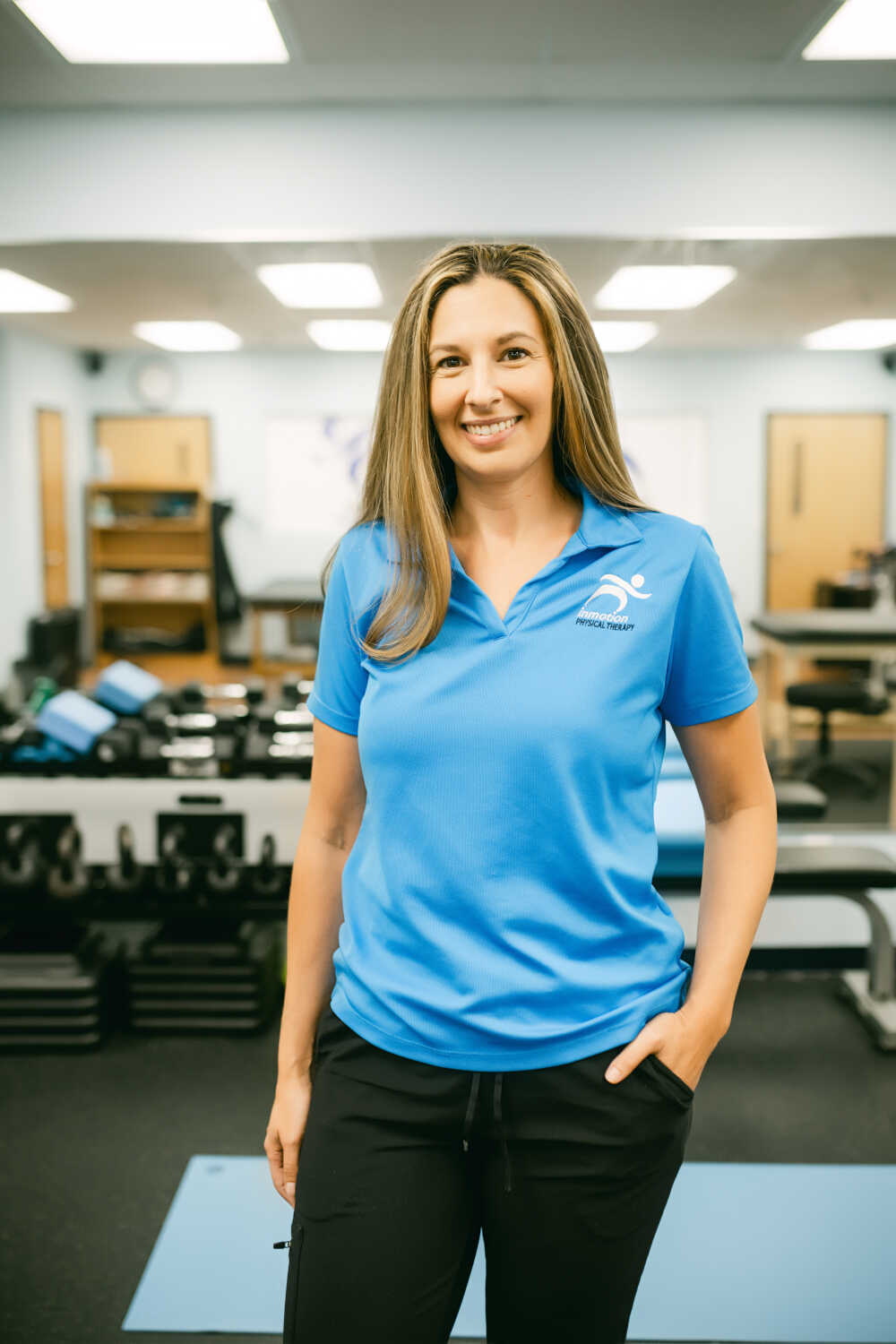
Laura Sommer has been practicing as a Physical Therapist since 2011. She graduated from Northeastern University, where she was a member of the Women’s Soccer Team. Laura is the owner of In Motion Physical Therapy located in Farmingdale, NY.