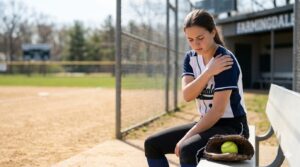
You just finished a high-intensity session with your soccer team, but as you walk to the car, your knees are throbbing. Again.
If you’re a high school athlete near Farmingdale, you know the drill. You’ve worked too hard to sit on the sidelines, and you definitely don’t want to let your team down. But when you tell a coach or a doctor your knees are sore, the advice is almost always the same: “Just rest for a couple of weeks.”
For a competitive player, “just resting” feels like a death sentence for your season. At In Motion Physical Therapy, we know that sore knees after soccer aren’t just a nuisance—they are a sign that your body’s mechanics aren’t keeping up with your performance.
First: Is This “Sore” or “Serious”?
If you’re reading this article at 2 a.m. worried you tore something, take a breath. Sore knees after soccer are rarely a torn ACL, meniscus, or MCL.
Here’s the difference:
Acute Ligament Tears (ACL/MCL/Meniscus) happen from a specific moment—usually a non-contact plant-and-twist, a direct collision, or an awkward landing where you felt (or even heard) a “pop.” These injuries come with immediate swelling (often within hours), instability (your knee feels like it’s “giving out”), and an inability to bear weight. If that’s you, skip this article and get to an orthopedic doc ASAP.
Sore knees after soccer, on the other hand, come on gradually. You finish the game, but hours later (or the next morning) your knees feel stiff, achy, or tender. This is overuse-related discomfort, not structural damage.
Soreness vs. Pain: What’s the Difference?
Understanding the difference helps you know when to push through and when to get help:
Muscle Soreness = A dull, achy feeling in the muscles (like your quads or hamstrings) that peaks 24–48 hours after activity. This is normal delayed-onset muscle soreness (DOMS) from hard training. It should improve with movement and disappear within 3–4 days.
Joint Soreness = A deep, persistent ache in or around the knee joint itself—not the muscles. It doesn’t always feel sharp, but it lingers and often gets worse with activity like sprinting, cutting, or going up and down stairs. This is what we’re talking about when we say sore knees after soccer.
Pain = Sharp, stabbing, or shooting sensations that stop you mid-movement or make you limp. Pain is your body’s alarm system saying something is wrong now. Soreness is more of a “yellow light”—your body saying it needs support to keep performing.
Bottom line: If your knees are sore but stable, you didn’t hear a pop, and you can still walk (even if it’s uncomfortable), you’re likely dealing with an overuse pattern, not a tear. That’s exactly what we specialize in at In Motion Physical Therapy in Farmingdale.
Why Your Knees Feel Sore After Soccer
Soccer is a game of constant “cutting,” explosive sprinting, and heavy decelerations. Every time you plant your foot to change direction or land from a header, your knee absorbs forces equivalent to 3–5 times your body weight.
When your muscles, tendons, and movement patterns can’t handle that load efficiently, your knees take the brunt of it. Here are the three most common causes of sore knees after soccer we treat at our clinic:
1. Patellar Tendonitis (Jumper’s Knee)
This is an overuse injury where the tendon connecting your kneecap to your shinbone becomes inflamed from repetitive stress. Soccer players develop this from repeated kicking, jumping for headers, and explosive starts and stops.
How to recognize it: Sharp or burning pain right below your kneecap, especially when you’re kicking, jumping, or running uphill. The pain might feel worse when you first start playing but “warms up” as you move—only to return with a vengeance after you cool down.
2. Osgood-Schlatter Disease
Common in growing athletes, this causes a painful bump just below the knee where the patellar tendon attaches to the shinbone. Your bones are growing faster than your muscles and tendons can keep up, creating tension and inflammation at that attachment point.
How to recognize it: A visible or tender bump below your kneecap, especially during growth spurts. Interestingly, we see this hit girls and boys at different ages due to growth spurt timing—typically ages 10–13 for girls and 12–15 for boys.
Note: If you’re also experiencing heel pain during the same growth spurt, you might be dealing with Sever’s disease—a similar growth plate issue that affects the heel. Both conditions are common in multi-sport athletes. Learn more about Sever’s Disease in Young Athletes.
3. Patellofemoral Pain Syndrome (Runner’s Knee)
Often called “general kneecap pain,” this is the most common cause of sore knees after soccer. It happens when the cartilage under your kneecap softens or wears down because your kneecap isn’t “tracking” correctly in its groove when you run, pivot, or land.
How to recognize it: A dull, achy pain around or behind the kneecap that gets worse with activity. You might also feel pain when sitting with your knees bent for a long time (like in class or on a bus ride home from an away game), or when walking downstairs.
The “Rest Trap” vs. The Athlete’s Solution
Here’s why “just resting” rarely fixes sore knees after soccer: it doesn’t address the reason your knee started hurting in the first place.
Maybe your glutes aren’t firing properly, so your quads are doing all the work. Maybe you’re landing with your knees caving inward (valgus collapse), putting excessive stress on the joint. Maybe your ankle mobility is limited, forcing your knee to compensate with every cut.
When you rest for two weeks and then go back to the pitch, the weakness or movement dysfunction is still there—and the pain comes right back, often worse than before.
The In Motion Approach: Keep You Playing While We Fix the Root Cause
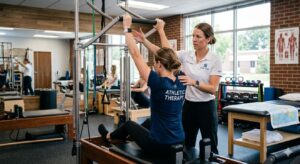
At In Motion Physical Therapy, we treat high school soccer players like the high-performers they are. Our goal isn’t to sideline you—it’s to keep you training at a modified intensity while we systematically address the biomechanical issues causing your knee pain.
Here’s what that looks like:
Dynamic Strengthening – We build strength in your quads, glutes, and hip stabilizers so they absorb force efficiently instead of dumping it all into your knee joint. Exercises like single-leg squats, lateral band walks, and eccentric step-downs are game-changers.
Movement Pattern Analysis – We watch how you cut, land, and decelerate to identify faulty mechanics. Do your knees cave in? Are you landing stiff-legged? These patterns increase ACL injury risk and are often the hidden culprit behind chronic soreness.
Manual Therapy & Recovery Modalities – Tools like instrument-assisted soft tissue mobilization (scraping), cupping, and targeted stretching help manage inflammation and improve tissue quality so you can keep training while we rebuild your foundation.
Progressive Return to Play – We don’t pull you off the field completely unless absolutely necessary. Instead, we create a plan to modify training volume and intensity while building capacity, so you’re stronger when you return to full competition.
How to Prevent Sore Knees After Soccer
Prevention is always better than treatment. If you’re constantly dealing with knee soreness, these strategies can help:
Warm Up Properly – Spend 10–15 minutes on dynamic movements like leg swings, walking lunges, and high knees before practice. Static stretching after training is fine, but save the dynamic work for before.
Strengthen Your Hips and Glutes – Weak hips force your knees to work overtime. Incorporate lateral band walks, clamshells, and single-leg bridges into your warm up routine 2–3 times per week.
Work on Landing Mechanics – Practice landing softly with your knees aligned over your toes (not caving inward). Even 5 minutes of jump training drills can drastically reduce knee stress.
Don’t Skip Recovery – Foam rolling, adequate sleep, and proper nutrition aren’t optional for competitive athletes. Your body rebuilds itself during rest, not during training.
Address Soreness Early – Don’t wait until you’re limping to get help. If soreness persists for more than a week or starts affecting your performance, that’s your cue to see a physical therapist.
How long should sore knees last after playing soccer?
Can I keep playing soccer with sore knees?
What is the fastest way to recover from sore knees after soccer?
Should I ice my knees after soccer?
When should I see a doctor or physical therapist for knee pain from soccer?
Is it normal to have sore knees after every soccer game?
What's the difference between knee soreness and a knee injury?
Get Back to 100% for the Next Match
Don’t wait until “sore knees” becomes a season-ending injury. If you’re a soccer player on Long Island tired of playing through pain, it’s time for a strategy that actually works.
At In Motion Physical Therapy in Farmingdale, we specialize in Physical Therapy for Athletes. We understand the pressure of club seasons, the drive to play in college, and the mental toll of being sidelined. We don’t just want you “pain-free”—we want you performing better than you were before the soreness started.
Ready to stay on the pitch?
Schedule an Initial Evaluation at our Farmingdale clinic today and let’s get a plan in place to keep you in the game.
Curious about how our approach helps prevent injuries, too?
Check out our Sports Performance Training and Pilates for Athletes programs.
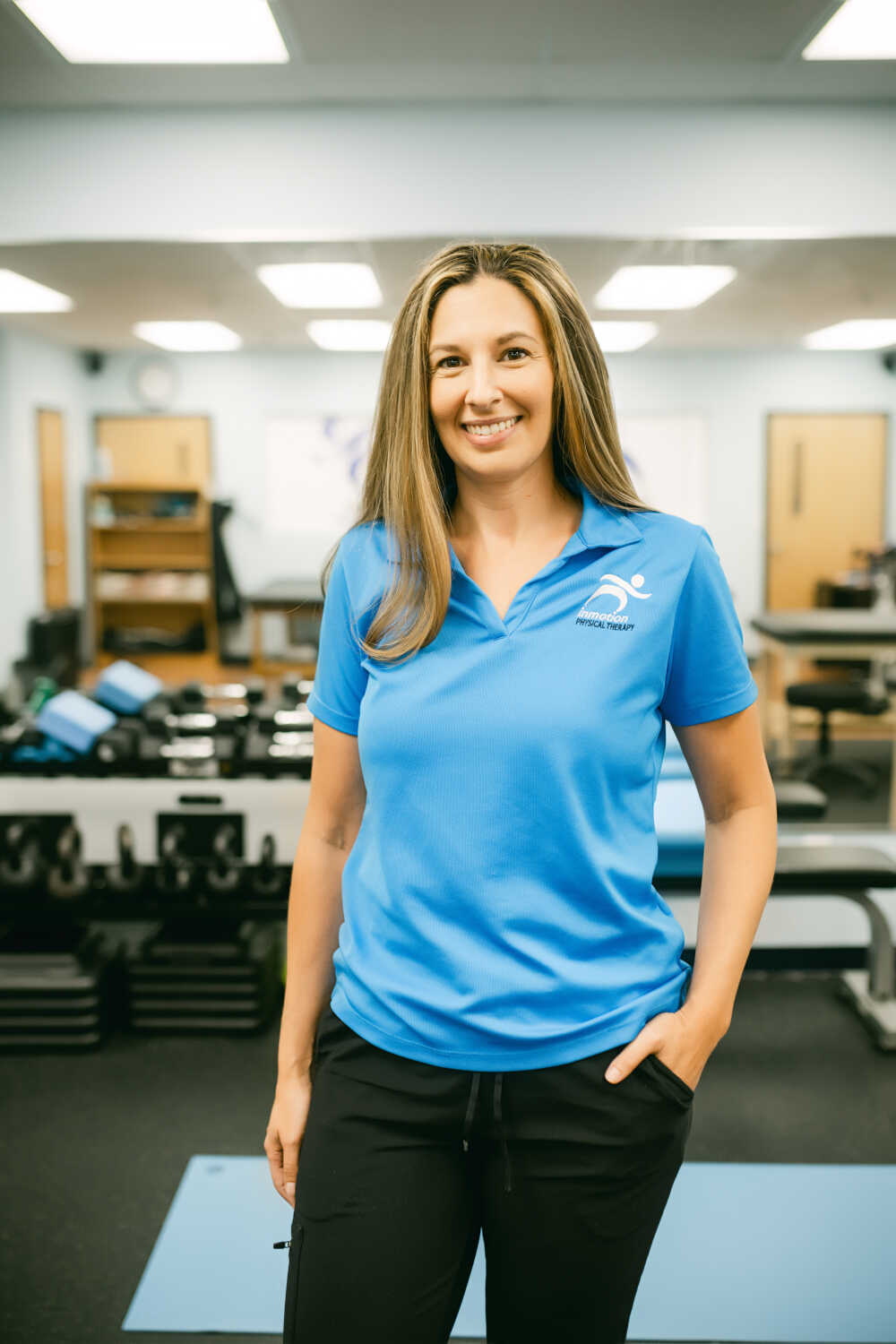
Laura Sommer has been practicing as a Physical Therapist since 2011. She graduated from Northeastern University, where she was a member of the Women’s Soccer Team. Laura is the owner of In Motion Physical Therapy located in Farmingdale, NY.