The Hidden Cost of a Long Season for Baseball Pitchers
You know the feeling. It’s mid-July, the scouts are in the stands, and your arm feels like it’s made of lead. You’re pushing through, but that effortless “pop” in your glove is starting to fade.
As a physical therapist who works with elite baseball players in Farmingdale, I see this every day. Pitchers are the most specialized athletes in the world, and that specialization comes with a price. Over a long season, the repetitive stress of throwing causes most pitchers to lose shoulder mobility, especially internal rotation.
If you lose that rotation, your body compensates by arching your lower back or over-stressing your elbow. Suddenly, you’re not just fighting the batter—you’re fighting your own body. To stay on the mound and keep your velocity, you need a specific routine designed to maintain your 180° total motion arc.
Expert Tip: We look for 180° of total shoulder motion. If you have 100° of external rotation (laying back), you need 80° of internal rotation to keep that arc healthy.
The good news? Most of this is preventable. A targeted mobility routine—done consistently—can protect your arm all season long. But before you hit the training room floor and start stretching, there’s one very important thing we need to get out of the way.
Why I Hate the Sleeper Stretch (And Why You Should Stop)
Before we get to the “good stuff,” we have to address the “bad.” If you go to any dugout in America, you’ll see a kid on the ground doing the sleeper stretch—laying on their side and shoving their forearm toward the floor.
Please, stop doing this.
The sleeper stretch often pinches the structures in the front of your shoulder rather than stretching the back of the joint. It’s aggressive, it’s often performed with poor form, and it can actually lead to impingement—the very thing you’re trying to avoid. We want to improve mobility without grinding the joint.
The Best Pitcher Shoulder Stretches: My ‘Big 5’ Mobility Routine
These are the stretches I prescribe to my athletes at In Motion Physical Therapy. They focus on the thoracic spine (mid-back) and the shoulder blade—the foundation of a healthy arm.
1. T/S Extension on Foam Roller
Your shoulder can only go as far as your mid-back allows. If your spine is stiff, your shoulder takes the hit.
How to: Place the roller under your mid-back. Support your head, keep your butt on the ground, and gently lean back over the roller.
2. T/S Rotation on Foam Roller
Pitching is a rotational sport. If you can’t rotate through your ribs, you’ll “drag” your arm behind you.
- How to: Side-lying with your top knee pinned on the roller. Reach your top arm across your body like a book opening.
3. Quadruped Ys on Foam Roller
This builds active mobility so you can actually use that range of motion during your windup.
- How to: On all fours, reach your arms out in front of you on the foam roller. Sit your hips back toward your heels and lift your arm into the letter “Y” while pushing down into the foam roller with the other arm. This helps promote stability through your lats and core.
4. Tall Kneeling Lat Stretch
Tight lats pull your shoulders into a “rounded” position, killing your ability to get into a deep “lay back” position.
- How to: Kneel in front of a bench or chair. Place your elbows on the surface with a PVC pipe or foam roller between your hands, and sink your chest toward the floor.
5. Horizontal Abduction with Lacrosse Ball
Instead of stretching, we’re “smashing” the tight tissue in the back of the shoulder (the posterior capsule).
- How to: Lean against a wall with a lacrosse ball tucked into the “meat” of the back of your shoulder. Move your arm across your body slowly.
Are These Pitcher Shoulder Stretches Right for You?
Stretching is great, but “guessing” is dangerous. Every pitcher has a different “blueprint.” Some have too much mobility (laxity) and actually need strength, not stretches. Others are locked up and need a mobilization plan.
As a pitcher, your goal is 180° of shoulder flexion without arching from your lower back. If you can’t reach your arms straight overhead without your ribs popping out, you’re losing power.
This is where expert care comes in. At In Motion Physical Therapy, we don’t just give you a list of exercises. We perform a Biomechanical Analysis to see exactly where your kinetic chain is breaking down. We look at your hip internal rotation, your T-spine mobility, and your shoulder arc to ensure you aren’t just “stretching” your way into an injury.
Conclusion
Don’t wait until you feel a “pop” or a “twinge” to take your recovery seriously. Your arm is your career—treat it that way.
If you’re looking for specialized sports physical therapy and you’re located near Farmingdale, NY, we would love to help you at In Motion Physical Therapy.
Ready to see exactly how your body is moving?
Book your Biomechanical Analysis here to stay healthy and gain velocity.
Note: This blog post provides general information and should not be considered a substitute for professional medical advice. If you have any concerns or specific conditions, consult with your healthcare provider before starting any exercise program.
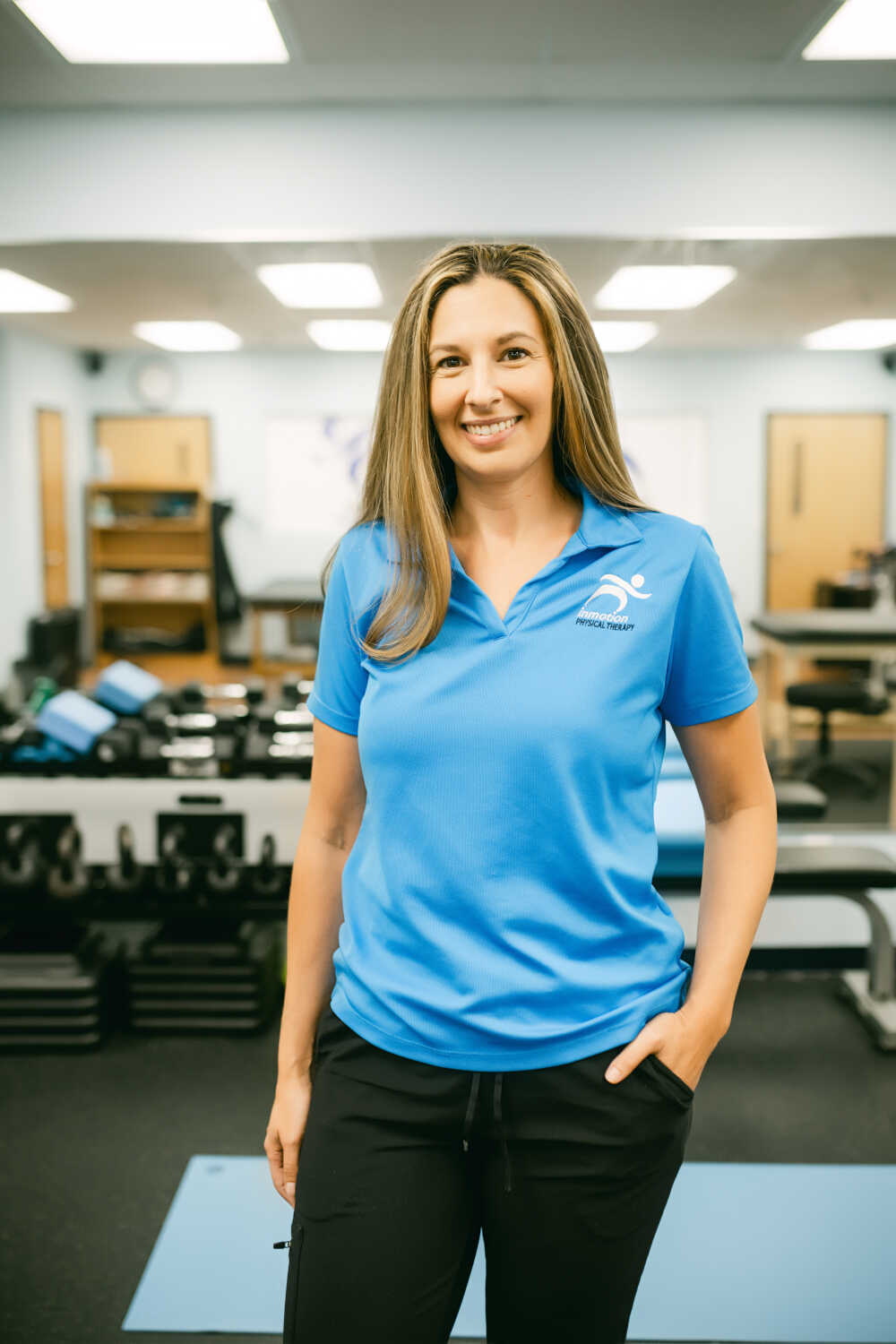
Laura Sommer has been practicing as a Physical Therapist since 2011. She graduated from Northeastern University, where she was a member of the Women’s Soccer Team. Laura is the owner of In Motion Physical Therapy located in Farmingdale, NY.