The best Osgood Schlatter treatment for teenagers isn’t rest — it’s a smart, step-by-step plan that manages pain, rebuilds strength, and gets your athlete back to the sport they love. Here’s exactly how to do it.
If your teenager has been told to “just rest” their Osgood Schlatter, you’re not alone — and that advice is exactly why so many young athletes end up sitting out for months with no real progress.
Osgood-Schlatter treatment for teenagers has come a long way, and the research is clear: athletes who follow an active, progressive program recover faster, come back stronger, and are far less likely to end up back on the sideline.
I’ve worked with competitive young athletes at In Motion Physical Therapy for years, and the pattern I see over and over is the same — a motivated kid, a frustrated parent, and a “wait it out” plan that just isn’t working. In this post, I’m going to walk you through the exact roadmap we use to take athletes from pain and bench time back to full competition. You’ll get the phase-by-phase progression, the specific exercises we use at each stage, and the expert tips that make the difference between a real recovery and just waiting for the pain to go away.
At In Motion Physical Therapy, we work with athletes near Farmingdale, and patients travel from all over Long Island to get the best sports physical therapy treatment available. If you’re looking for a team that understands competitive athletes — and actually gets them back to competing — you’re in the right place.
First — What causes Osgood Schlatter disease in teenagers?
Osgood Schlatter is a growth-related knee condition that causes pain at the tibial tubercle — that bony bump just below the kneecap. During a growth spurt, that area is still developing, and the repeated stress of jumping, running, and squatting can irritate it.
It’s incredibly common in active teenagers, especially athletes in sports that involve a lot of running and jumping — think basketball, soccer, gymnastics, and baseball.
The frustrating part? It can linger for months or even years if it’s not treated the right way. And the classic advice of “just rest it” often leaves athletes weaker, deconditioned, and no closer to getting back to their sport.
Here’s a better way.
The Osgood Schlatter Treatment Roadmap
Think of this as four phases. Each one builds on the last, and your athlete needs to earn their way to the next level — not rush it.
Phase 1: Calm It Down (Weeks 1–2)
Yes, we do pull back from the things that are most aggravating — practice, games, heavy loading. But we don’t go to zero.
This is where we use isometric exercises to keep the quad working without flaring up the knee. These are static holds — no movement through the joint, but real muscle work happening.
Exercises to start:
- Long arc quad holds — straighten the leg and hold for 30–45 seconds. Simple, but effective.
- Wall sits — hold at 60–90° of knee bend for 30–45 seconds, rest, repeat.
- Split squat isometric holds — great for loading the quad in a more sport-specific position.
The goal here is simple: keep the pain at a 2 out of 10 or lower during and after exercise. If they wake up the next morning and the knee is angrier than usual, we backed off too fast. If pain stays low, we’re on the right track.
Pro tip: Ice after activity if the knee feels warm or puffy. It won’t cure anything, but it helps manage the local inflammation so your athlete can train consistently.
Phase 2: Build the Foundation (Weeks 3–6)
Once pain is manageable, we start adding load. This is where the real work happens — and where most programs skip ahead too fast.
If your athlete isn’t ready for heavy squats yet, blood flow restriction (BFR) training is one of my favorite tools at this stage. We can get serious quad strength gains at very low loads by using a cuff to restrict blood flow to the working muscle. It sounds intense but it’s well-tolerated, and it’s a game-changer for athletes who need to rebuild strength without aggravating their knee.
Exercises at this phase:
- BFR straight leg raises and squats — build strength without high patellar tendon load
- Hip abductor bridges — don’t skip these. Strong hips take stress off the knee, full stop. Side-lying hip abduction, clamshells, or a loaded bridge with a band around the knees all work here.
- Bodyweight wall squats progressing to goblet squats — gradually increasing depth and load as pain allows
What you’re training toward: your athlete should be able to perform a bodyweight squat to parallel with pain at a 2 or less before moving to the next phase. That’s the green light.
Phase 3: Eccentric Loading — The Secret Weapon (Weeks 6–10)
Here’s where most Osgood Schlatter programs fall short. They get the athlete pain-free and call it done. But if you want them to actually stay healthy when they go back to practice — cutting, landing, decelerating — you have to train the quad eccentrically. That means loading it as it lengthens.
This is uncomfortable. It will feel like more than a 2 out of 10 at first, and that’s actually okay at this phase. The tendon is adapting. As long as pain doesn’t spike above a 4 and returns to baseline within 24 hours, you’re in the right zone.
Exercises to focus on:
- Forward step-downs — step down off a 4–6 inch box slowly, controlling the descent on the working leg. This is the foundation.
- Lateral step-downs — same idea, different plane of motion.
- Lunges — walking and reverse lunges, progressing to adding weight once form is solid.
These exercises train the quad and patellar tendon to handle the load of sport. Skip this phase and your athlete will be right back in your office three weeks into the season.
Phase 4: Return to Impact (Weeks 10+)
Now we earn back the explosiveness. This phase is about teaching the body how to produce and absorb force — the exact demands of practice and competition.
How we progress:
- Box jumps — start with a low box, focus on landing mechanics (soft knees, hips back, quiet landing)
- Single-leg hops — forward, lateral, diagonal
- Sport-specific drills — for a baseball player, that might look different than for a gymnast or a basketball player
We match return-to-sport activities to where your athlete is in their exercise progression. They don’t go back to full practice until they can complete this phase with pain consistently at a 2 or less.
One more thing: going back to sport doesn’t mean going back to everything all at once. We think about training load — frequency, duration, intensity — and build back gradually. The goal is full participation, but we earn it.
Frequently Asked Questions about Osgood Schlatter Treatment for Teenagers
How long does Osgood Schlatter last in teenagers?
Can a teenager still play sports with Osgood Schlatter?
Does stretching help Osgood Schlatter?
Is it okay to exercise with Osgood Schlatter?
When should I take my teenager to a physical therapist for Osgood Schlatter?
What Parents and Athletes Need to Hear
Osgood Schlatter doesn’t have to end a season. But it does need to be taken seriously. The athletes I see who struggle the most are the ones who either pushed through pain with no plan — or sat on the couch for six months and came back deconditioned.
The athletes who thrive? They follow a smart progression, they stay as active as their knee allows, and they come back to sport stronger — literally — than they were before.
Your teenager has worked too hard to let this injury define their season. Let’s make sure it doesn’t.
Ready to Build Your Athlete’s Comeback Plan?
At In Motion Physical Therapy in Farmingdale, NY, we specialize in getting competitive young athletes back to the sport they love — without the guesswork. We’ll build a personalized plan from day one so your athlete knows exactly where they are, where they’re going, and how to get there.
Book an evaluation today — and let’s get them back on the field.
Next on your Reading List:
References
Rathleff, M. S., Winiarski, L., Krommes, K., Graven-Nielsen, T., Hölmich, P., Olesen, J. L., Holden, S., & Thorborg, K. (2020). Activity modification and knee strengthening for Osgood-Schlatter disease: A prospective cohort study. Orthopaedic Journal of Sports Medicine, 8(4). https://doi.org/10.1177/2325967120911106
Krommes, K., Thorborg, K., Clausen, M. B., Rathleff, M. S., Olesen, J. L., Kallemose, T., & Hölmich, P. (2024). Self-management including exercise, education and activity modification compared to usual care for adolescents with Osgood-Schlatter (the SOGOOD trial): Protocol of a randomized controlled superiority trial. BMC Sports Science, Medicine and Rehabilitation, 16(89). https://doi.org/10.1186/s13102-024-00870-0
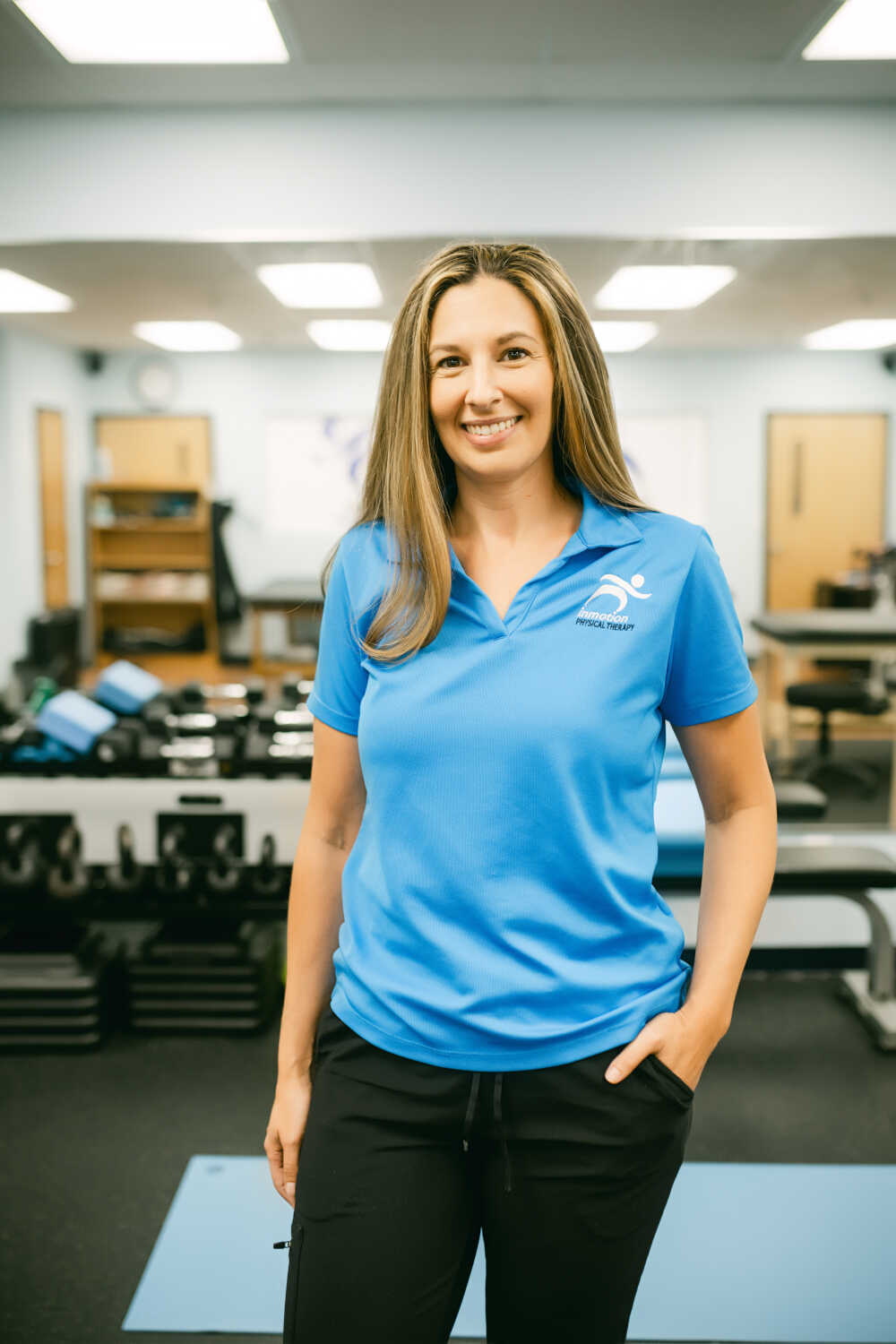
Laura Sommer has been practicing as a Physical Therapist since 2011. She graduated from Northeastern University, where she was a member of the Women’s Soccer Team. Laura is the owner of In Motion Physical Therapy located in Farmingdale, NY.