Golfing is not inherently bad for your back — but a stiff thoracic spine, tight hips, or poor swing mechanics can put your lumbar spine under serious strain. With the right warm-up, mobility work, and technique adjustments, most golfers can play pain-free for decades. If your back pain is lingering between rounds or getting worse, a Golf Performance Assessment with a physical therapist can help you find the root cause and get back on the course.
→ Book a Discovery Call
Are you a golfer player on Long Island? Don't settle for generic PT. At In Motion Physical Therapy in Farmingdale, NY, we specialize in getting golfers of all levels and ages back to 100%.
You love golf. You love the early tee times, the competition, the camaraderie — and you’d rather be on the fairway than anywhere else. But lately, you’ve been finishing 18 holes with a stiff, achy back, or worse, you’ve been skipping rounds altogether because the pain just isn’t worth it.
So you find yourself wondering: is golfing bad for your back?
The short answer is no — golf isn’t inherently bad for your back. But the way most golfers swing, warm up (or don’t), and manage their mobility can absolutely lead to back pain over time. The good news is that with the right approach, back pain doesn’t have to be part of your game.
In this post, we’re going to break down exactly why back pain is so common among golfers, what you can do about it, and when it’s time to stop guessing and get a professional set of eyes on your swing.
Why Golf and Back Pain Go Together So Often
The golf swing is one of the most complex and demanding movements in all of sport. In less than two seconds, you’re generating massive rotational force through your spine — and doing it over and over again for 18 holes, often on back-to-back days.
That alone doesn’t make golfing bad for your back. What does create problems is when the spine ends up doing all the heavy lifting that your hips and thoracic spine (your mid-back) were supposed to share.
Here’s how it typically unfolds:
Your thoracic spine is designed to rotate. Your hips are designed to rotate. But if either one of those areas is stiff or restricted — which is incredibly common, especially in golfers over 50 — your lower back will pick up the slack. Round after round, your lumbar spine absorbs rotational forces it wasn’t built to handle, and that’s when you start feeling it.
Common culprits include limited hip internal rotation, a stiff mid-back that won’t turn through the swing, and weakness in the glutes and core that forces the lower back to stabilize everything on its own. These aren’t character flaws — they’re movement patterns that develop over time and are completely correctable with the right intervention.
The Most Common Golf-Related Back Problems
Before we talk about what to do about it, it helps to know what you might actually be dealing with. Here are the back conditions we see most often in golfers:
Lumbar Muscle Strain — The most common golf-related back injury. Repetitive swinging without adequate warm-up or recovery leads to overworked muscles that eventually say enough. You’ll typically feel this as a dull ache or tightness across the lower back, usually worse the day after a round.
Facet Joint Irritation — The facet joints in your spine allow for rotation, but when they’re compressed repeatedly with poor mechanics, they can become inflamed and painful. This often shows up as sharp pain on one side of the low back, especially with extension or twisting.
Disc Problems — The intervertebral discs are essentially shock absorbers. Golf’s combination of compression and rotation can stress these structures, particularly if you’re already dealing with some age-related disc changes. Pain that radiates down the leg is a red flag that the disc may be involved.
SI Joint Dysfunction — The sacroiliac joint, where your spine meets your pelvis, can become irritated with the asymmetrical loading of a golf swing. It often mimics lower back pain but sits more toward one side of the buttock.
What a Spine-Friendly Swing Actually Looks Like
Here’s the thing: a properly executed golf swing is remarkably well-tolerated by the spine. It’s the compensatory patterns — the ways your body works around limited mobility — that create the problem.
A spine-friendly swing relies on three things: thoracic rotation, hip mobility, and core stability working together as a system. When all three are present, your lumbar spine stays relatively neutral and protected throughout the swing. When one piece is missing, the lower back fills the gap.
This is exactly why TPI-certified physical therapists approach golf fitness differently than a general trainer would. A TPI (Titleist Performance Institute) screen looks at how your body actually moves through the positions required by the swing, identifies the physical limitations that are creating compensation patterns, and then addresses those limitations directly. The result isn’t just less back pain — it’s a more efficient, more powerful swing.
5 Warm-Up Drills for a Happier Back on the Course
One of the fastest ways to reduce back pain during golf is to stop walking straight from the parking lot to the first tee. Your joints and muscles need time to warm up before you start generating rotational force. Try these five drills before your next round:
1. Cat-Cow (10 reps) On all fours, slowly arch your back up toward the ceiling (cat), then let it drop toward the ground (cow). This primes your spinal segments and gets fluid moving through your discs before you swing.
2. Thoracic Rotation in Quadruped (10 reps each side) Still on all fours, place one hand behind your head and rotate your elbow toward the sky, then toward the floor. This directly targets the thoracic mobility your swing depends on.
3. 90/90 Hip Stretch (60 seconds each side) Sit on the ground with both knees bent at 90 degrees, one leg in front and one to the side. This opens up hip internal and external rotation — two of the most important ranges of motion in the golf swing.
4. Standing Hip Circles (10 each direction, each leg) Stand on one foot and draw large circles with your opposite knee. This warms up the hip joint and reinforces the range of motion you’ll use in your backswing and follow-through
5. Shoulder Turn with a Club (10 reps) Hold a club across your shoulders and make practice turn motions, focusing on rotating your upper body while keeping your lower body relatively stable. This gives your brain and body a chance to rehearse the swing pattern before you add a ball.
These five drills take about 8-10 minutes and can make a significant difference in how your back feels during and after your round.
Is It Soreness or an Injury? Knowing When to See Someone
Normal muscle soreness after golf — especially after a long round or when you haven’t played in a while — is common and nothing to worry about. It typically shows up the day after, feels like a general tiredness or tightness, and resolves within a day or two.
But there are signs that what you’re feeling goes beyond normal soreness, and those deserve attention sooner rather than later:
- Pain that shoots down your leg — This can signal nerve involvement, such as sciatica or a disc issue, and shouldn’t be ignored.
- Pain that wakes you up at night — Nighttime back pain that’s not position-related can be a sign of something beyond a musculoskeletal issue and warrants a medical evaluation.
- Back pain that’s getting progressively worse with each round, not better.
- Numbness, tingling, or weakness in the legs or feet — These are neurological symptoms that need to be evaluated.
- Pain that’s sharp, sudden, or severe during or immediately after a swing.
- Stiffness that doesn’t loosen up after you’ve been moving for 30-45 minutes.
If any of these sound familiar, it’s time to stop playing through it and get an actual answer — not just a guess based on YouTube videos or what worked for your playing partner.
Where Farmingdale Golfers Find Real Relief
If you’ve been managing back pain round after round and you’re tired of just hoping it gets better, a Golf Performance Assessment at In Motion Physical Therapy in Farmingdale is designed specifically for you.
We use a TPI-certified evaluation process to identify exactly which physical limitations are driving your back pain — and your swing compensations. From there, we build a plan that addresses your mobility, stability, and movement patterns so you can get back on the course feeling strong and confident.
We also have access to recovery tools that most practices don’t offer, including Normatec compression, Marc Pro electrical stimulation, and hands-on soft tissue work (what our golfers usually call “scraping”) to address the muscular tightness that builds up over a golf season.
The goal is never just pain relief. It’s getting you back to playing the game you love — longer, stronger, and without spending the back nine counting down to the parking lot.
Ready to find out what’s really going on with your back?
Submit a form to request a Golf Performance Assessment at In Motion Physical Therapy in Farmingdale. We’ll dig in, find the root cause, and put a plan together that actually fits your game.
Frequently Asked Questions About Is Golfing Bad for Your Back?
Is golf bad for a herniated disc?
How do I stop my back from hurting when I golf?
Should I stop golfing if my back hurts?
Can physical therapy help golf back pain?
Next on your Reading List:
Note: This blog post provides general information and should not be considered a substitute for professional medical advice. If you have any concerns or specific conditions, consult with your healthcare provider before making changes to your recovery routine.
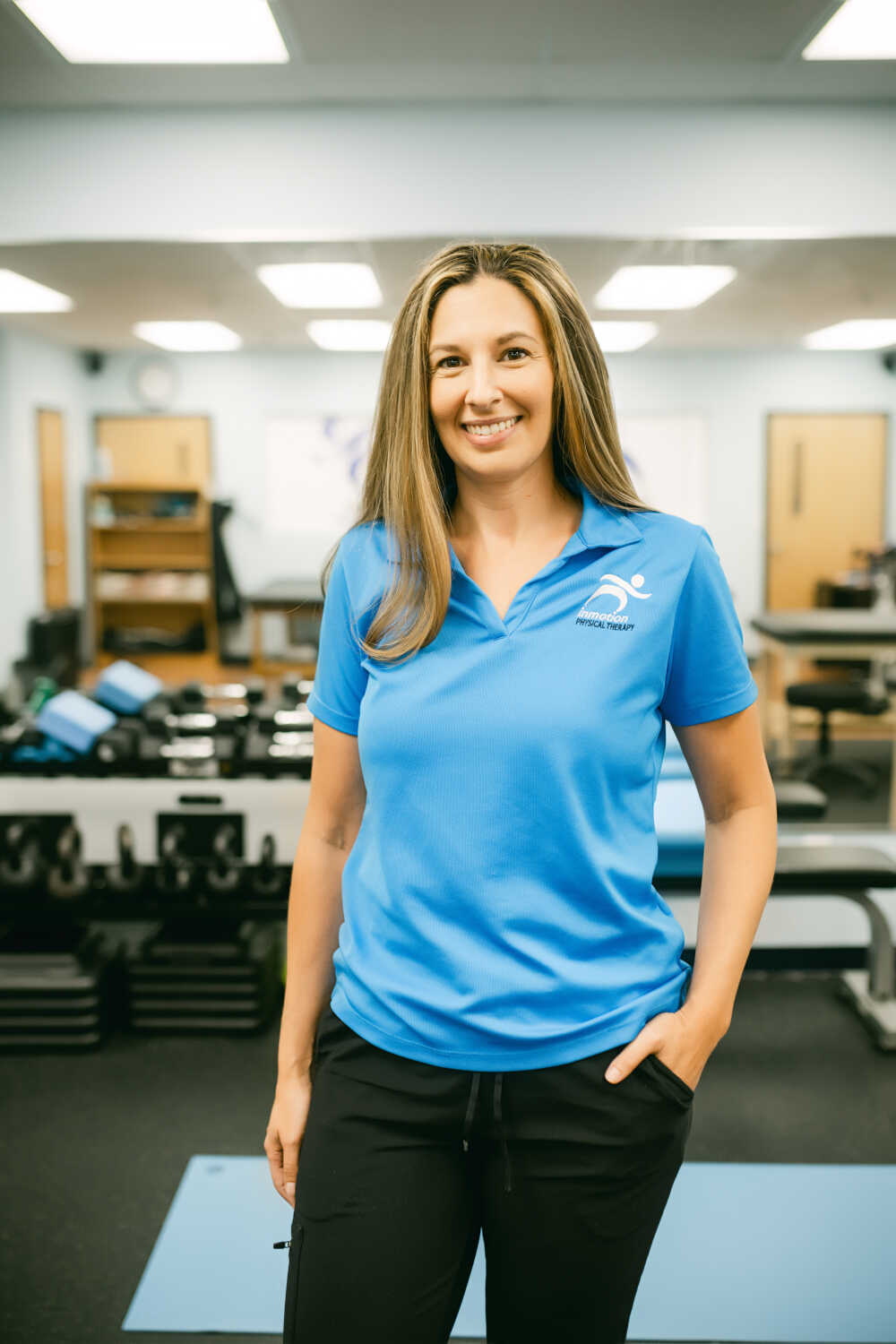
Laura Sommer has been practicing as a Physical Therapist since 2011. She graduated from Northeastern University, where she was a member of the Women’s Soccer Team. Laura is the owner of In Motion Physical Therapy located in Farmingdale, NY.