If you just tore your ACL, the first thing you likely asked was, “When can I play again?” While you might see professional athletes return in record time, understanding the biological acl healing timeline is the most important factor in whether you stay on the field or end up back in surgery.
As a physical therapist specializing in high school athletes, I’ve seen that the most successful recoveries aren’t the fastest ones—they are the most strategic. Research shows that for every month you delay your return to sport (up to 9 months), your risk of a re-tear is reduced by a massive 51%.
At In Motion Physical Therapy, we work with athletes near Farmingdale. Patients travel from all over Long Island to get the best treatment because we don’t treat you like a “patient”—we treat you like an athlete.
What is a normal ACL healing timeline?
The biological healing of an ACL graft is a process called “ligamentization.” This is when the tissue used for your repair (whether it’s your hamstring, patellar tendon, or quad) slowly transforms into a living ligament. This process can actually take up to 2 years to fully mature, but the most critical window for athletes is the first 9 to 12 months.
The 9-Month Minimum
Data from recent studies suggests that returning to sports before 9 months increases your re-injury risk by up to 7 times. This is why we focus on a “Criterion-Based” timeline rather than just a date on the calendar. We want to ensure your body is biologically ready for the demands of cutting and pivoting.
The 4 Phases of ACL Recovery
To make your recovery manageable, we break the acl healing timeline into four distinct athletic milestones.
Phase 1: Restore (Weeks 0-4)
The goal of this phase is to restore your basic “human” mechanics. We focus on getting your swelling down and your knee completely straight. If you don’t achieve full extension early on, your quad will struggle to “turn back on.” We often use IASTM (or “scraping”) during this phase to manage scar tissue and improve mobility.
Phase 2: Regain (Months 2-3)
In this phase, we regain your foundational strength. We move from table exercises to standing, dynamic loads. The main focus is quad symmetry; your quads are the “shocks” for your knee, and we need them firing perfectly before we move to the next level.
Phase 3: Reload (Months 4-6)
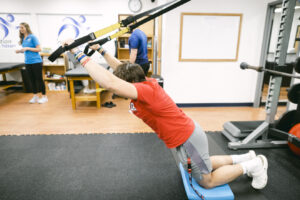
This is the “gym phase.” At this point, the graft is actually in its most vulnerable biological state, so we “reload” the body with controlled resistance training. You’ll be back in the weight room focusing on heavy lifting, single-leg stability, and the beginning of linear running. We are building the “armor” around your knee to prepare for impact.
Phase 4: Return (Months 6-9+)
This is the final transition to the field. We focus on sport-specific strength, movement, and agility. You’ll begin practices, cutting drills, and “unanticipated” movements where you have to react to a ball or an opponent. This phase ensures you don’t just return to play, but you return to performance.
How do I know when I’m ready to return to sport?
Being “cleared” by a surgeon is a great first step, but a physical therapist provides the final “green light” through objective testing.
Our Testing Criteria
We don’t guess; we measure. To pass our RTS protocol, athletes must demonstrate:
- Symmetry Goals: We push for 97-100% limb symmetry in our strength and hop testing, as 90% is often not enough to prevent re-injury.
- Range of Motion: Less than 5° difference in flexion and extension compared to your non-operative side.
- Strength: Minimum of 60% bodyweight using Tindeq strength testing device
- Y-Balance Test: An anterior reach difference of less than 4cm.
- Hop Testing Battery: We measure the Single Hop, Triple Hop, Cross Hop, and Timed 6M Hop.
Athletes must achieve >90% (and ideally >97%) distance/time compared to their “good” leg.
ACL Healing Timeline FAQ
Get answers to common questions about the road to recovery.
Can I return to sports at 6 months post-ACL?
While some athletes feel ready at 6 months, the research suggests this is often too early. Returning before 9 months significantly increases the risk of a second ACL tear because the graft has not yet reached full biological maturity.
Is it normal to have swelling after physical therapy?
A small amount of “localized” soreness or swelling after a hard session is normal. However, “bad signs” like a hot, red joint or a sudden loss of range of motion should be reported to your PT immediately.
Does “Pre-hab” really make a difference?
Absolutely. Getting your knee strong and quiet before surgery is one of the best ways to speed up your post-op acl healing timeline. Athletes who do pre-hab typically regain their quad control much faster after the operation.
ACL Healing Timeline Conclusion
Your recovery is a marathon, not a sprint. By following a criterion-based roadmap and respecting the 9-month window, you give yourself the best chance of returning to the sport you love without a second injury.
If you’re looking for specialized ACL physical therapy and you’re located near Farmingdale, NY, we would love to help you at In Motion Physical Therapy.
Book an appointment or learn more information by clicking here.
Next on Your Reading List:
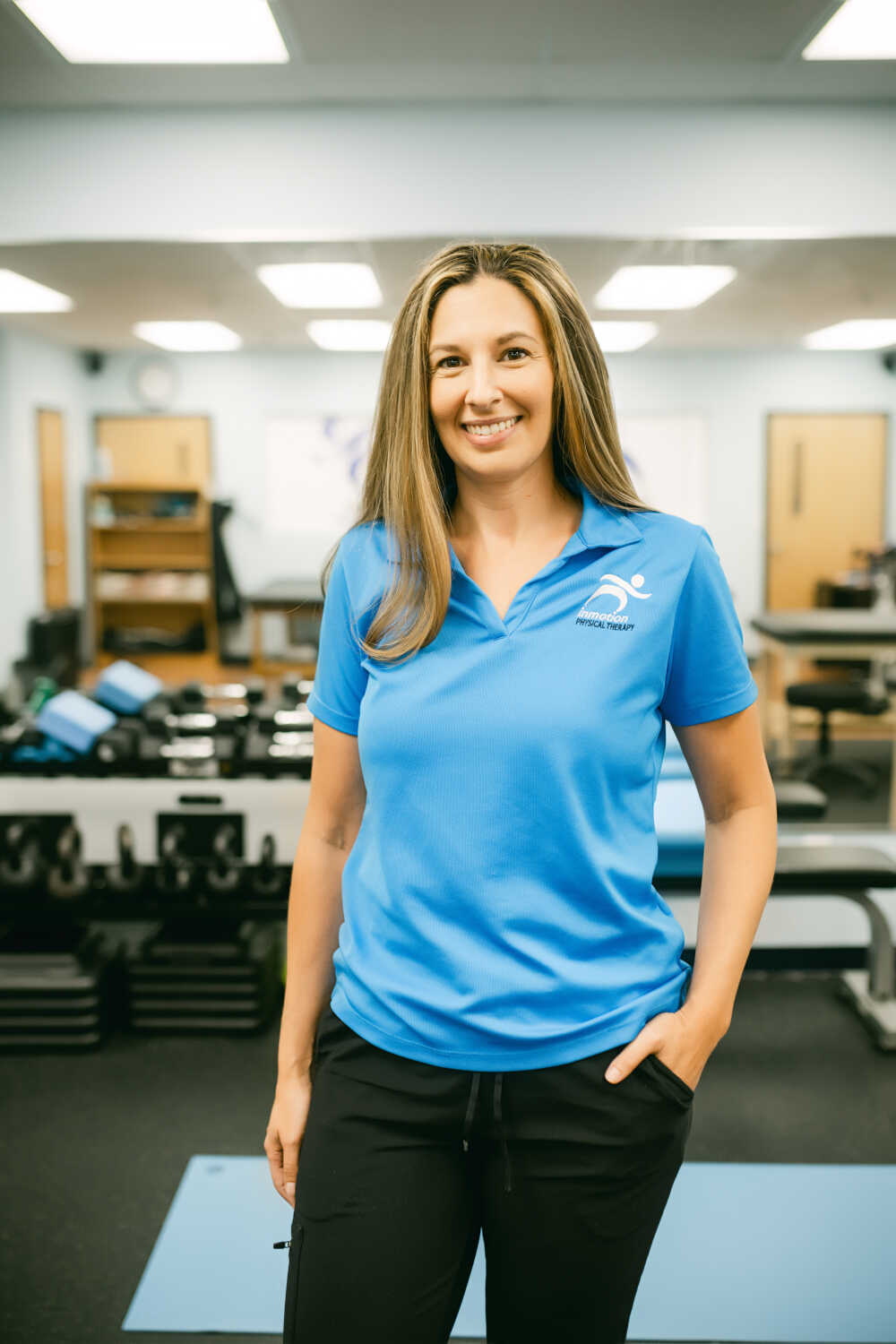
Laura Sommer has been practicing as a Physical Therapist since 2011. She graduated from Northeastern University, where she was a member of the Women’s Soccer Team. Laura is the owner of In Motion Physical Therapy located in Farmingdale, NY.