When you’re recovering from an ACL surgery or dealing with a gymnastics injury, the last thing your body can handle is heavy lifting. But here’s the problem: light weights alone won’t rebuild the strength you need to get back on the field.
So how do you gain muscle and strength when your injured joint can’t handle the load yet?
Blood flow restriction training might be the answer you’ve been looking for.
What is Blood Flow Restriction Training?
Blood flow restriction training (BFR) uses specialized cuffs—similar to a blood pressure cuff—placed on your arms or legs during exercise. These cuffs partially reduce blood flow to your muscles while you perform low-intensity movements.
The result? You can achieve the muscle-building benefits of heavy weight training using only 20-30% of your maximum strength.
Think of it this way: your brain thinks you’re doing a 200-pound squat, even when you’re only doing bodyweight leg exercises.
How Blood Flow Restriction Works: The Science Made Simple
When blood flow is partially restricted, less oxygen reaches your working muscles. This creates a controlled stress environment that triggers the same growth signals your body would produce during heavy lifting.
Your muscles fatigue quickly, hormones are released, and your body responds by building strength—all with light resistance that won’t stress your healing injury.
It’s like getting a heavy workout with light weights.
Why Athletes in Farmingdale Choose Blood Flow Restriction Training
For high school soccer players, competitive gymnasts, and weekend golfers recovering from injury, blood flow restriction training offers a critical advantage: you can maintain your competitive edge without compromising your recovery.
Key Benefits for Athletes:
Faster Strength Recovery – Build muscle during early-stage rehab when traditional strength training would be too aggressive for your healing tissues.
Reduced Joint Stress – Perfect for post-ACL surgery, ankle sprains, or any injury that limits your ability to lift heavy loads safely.
Prevent Muscle Atrophy – Keep your muscles from shrinking while you’re unable to train at full intensity or play your sport.
Quicker Return to Competition – Research shows BFR can accelerate strength gains, helping you meet your return-to-sport benchmarks faster than traditional rehab alone.
Is Blood Flow Restriction Training Safe?
The name sounds intimidating, but BFR is a well-researched technique backed by decades of clinical use. At In Motion Physical Therapy, we use FDA-listed equipment with individualized pressure settings based on your specific physiology.
Every session is monitored by a certified physical therapist who specializes in sports rehabilitation.
What Does a Blood Flow Restriction Session Feel Like?
During your session, you’ll notice:
Pressure from the cuff – Similar to having your blood pressure taken, though it stays on during your exercises
Rapid muscle fatigue – Your muscles get tired much faster than with regular light weights, which means it’s working
A “pumped” sensation – That full feeling you’d typically only get from high-volume training
Muscle soreness afterward – Expect some delayed onset muscle soreness, just like after a challenging workout
These sensations are normal and expected. If anything feels concerning—like sharp pain, excessive numbness, or color changes in your fingers or toes—we adjust or stop immediately.
Who Should (and Shouldn’t) Use Blood Flow Restriction Training
Blood flow restriction training is particularly effective for:
- Athletes recovering from ACL reconstruction or other knee surgeries
- Gymnasts managing lower back pain or hip injuries who need to maintain strength
- Golfers over 50 dealing with joint limitations but wanting to increase clubhead speed
- Weekend warriors bouncing back from ankle sprains or muscle strains
However, BFR isn’t appropriate if you have a history of blood clots, uncontrolled high blood pressure, pregnancy, or active infections near the cuff placement area.
Blood Flow Restriction Training Protocol: What to Expect
At In Motion Physical Therapy in Farmingdale, we follow evidence-based protocols that have been proven effective for athlete recovery:
Initial Assessment – We measure your limb occlusion pressure (LOP) and review your medical history to ensure BFR is safe for you.
Customized Pressure Settings – Your cuff pressure is individualized based on your LOP measurement. We typically start at 40-50% LOP for upper extremities and 50-80% for lower extremities.
Exercise Protocol – Most sessions follow a 30-15-15-15 rep scheme:
- Set 1: 30 reps with 30-second rest
- Set 2: 15 reps with 30-second rest
- Set 3: 15 reps with 30-second rest
- Set 4: 15 reps
Cuff stays inflated during the entire sequence, typically for 5-15 minutes maximum depending on the protocol.
Common Blood Flow Restriction Exercises for Athletes
Depending on your injury and phase of recovery, we might use:
- Early post-op: Quad sets, straight leg raises, short arc quads
- Mid-stage recovery: Leg extensions, mini squats, terminal knee extensions
- Advanced strengthening: Split squats, step-downs, single-leg RDLs
- Return to sport prep: Sport-specific movement patterns with controlled load
Blood Flow Restriction Training for Specific Injuries and Goals
ACL Recovery with Blood Flow Restriction Training
After ACL surgery, quad atrophy happens fast—and research shows that early BFR intervention can minimize muscle loss and accelerate strength gains during the critical first 12 weeks post-op.
We can start BFR as early as 2-3 weeks after surgery (once cleared by your surgeon) using gentle exercises like quad sets and straight leg raises.
By weeks 7-12, you’ll progress to more challenging movements like squats and step-downs, still using light loads but building the strength foundation you need for plyometrics and eventual return to sport.
Gymnast Hip and Back Injuries
Gymnasts dealing with hip impingement or lower back pain often can’t perform their usual high-impact conditioning, but they still need to maintain leg and core strength for tumbling and dismounts.
BFR allows you to build strength during your recovery period without aggravating your injury, so when you’re cleared to return to full training, you haven’t lost ground.
Golf Performance for Players Over 50
Golfers over 50 often face a frustrating reality: your joints can’t handle the same training intensity they used to, but you still want more clubhead speed and distance off the tee.
Blood flow restriction training offers a solution. You can build the leg and core strength needed for a powerful golf swing using lighter loads that don’t stress your knees, hips, or lower back.
How Long Does Blood Flow Restriction Take to Show Results?
Most athletes notice improved muscle endurance within 2-3 sessions. Measurable strength gains typically appear within 3-4 weeks of consistent BFR training (2-3 sessions per week).
For athletes recovering from surgery, BFR is often used during the early and mid-stages of rehab (weeks 0-12 post-op), then integrated alongside traditional heavy loading as you progress toward return to sport.
How much does blood flow restriction training cost?
Can I do BFR training at home?
Does Blood Flow Restriction training hurt?
How soon after surgery can I start Blood Flow Restriction?
Can Blood Flow Restriction replace traditional strength training?
Ready to Try Blood Flow Restriction Training in Farmingdale, NY?
If you’re an athlete in Farmingdale, NY dealing with an injury that’s keeping you from training at full intensity, blood flow restriction training might be the missing piece in your recovery plan.
At In Motion Physical Therapy, we treat athletes like the competitors they are—not just patients with injuries. Whether you’re a gymnast working through hip pain, a golfer trying to maintain performance despite joint limitations, or a high school athlete recovering from ACL surgery, we’ll build a customized BFR protocol designed to get you back to your sport safely and efficiently.
Schedule your discovery call today to learn whether BFR training is right for your recovery goals.
About In Motion Physical Therapy
Located in Farmingdale, NY, In Motion Physical Therapy specializes in sports rehabilitation for athletes of all levels. Whether you’re a competitive gymnast, a golfer over 50, or a high school athlete recovering from injury, we provide individualized treatment plans that help you return to your sport stronger and more confident. Our TPI-certified golf performance evaluations and specialized gymnastics injury protocols ensure you receive expert care tailored to your sport’s demands.
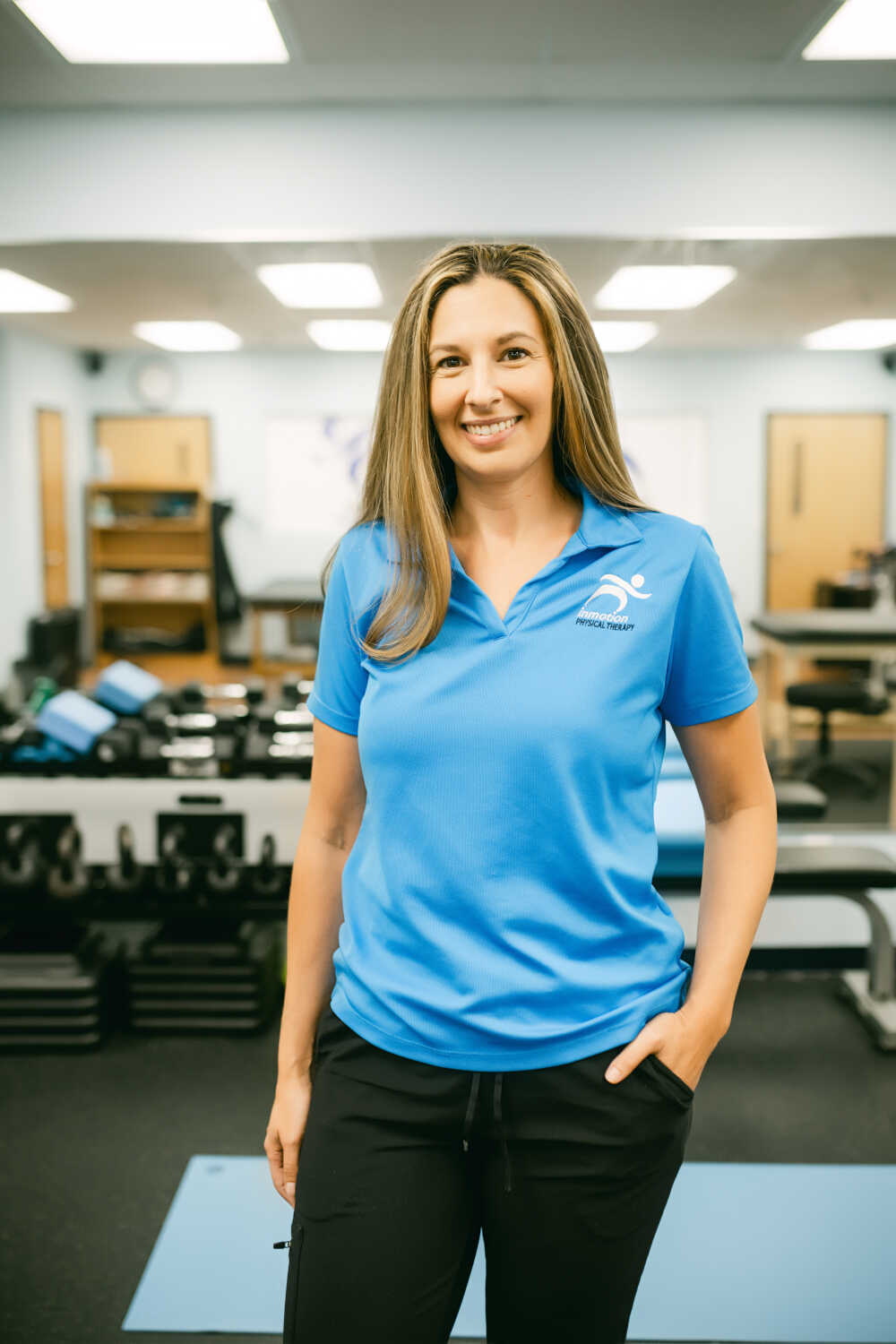
Laura Sommer has been practicing as a Physical Therapist since 2011. She graduated from Northeastern University, where she was a member of the Women’s Soccer Team. Laura is the owner of In Motion Physical Therapy located in Farmingdale, NY.